Enter password to view
AI Transformation for a Big 4 Firm
November 2024 – July 2025
The firm was midway through a $1.4 billion, five-year AI transformation when they brought us in.
The ask: research the space, identify where design could have the most impact, and build the experiences that would change how 140,000 auditors across 150 countries do their work.
We started with foundational research, then moved into design: a GenAI assistant for the assurance practice, and a multi-agent orchestrator for complex financial audit workflows. The core design challenge across both was trust. Auditors work in a high-stakes, regulated domain. A system that gives experts no meaningful way to verify its reasoning, fails before it starts.
Foundational Research from a UX Perspective
LLMs were evolving fast, enterprise AI design patterns were still forming, and the audit context had constraints most GenAI products had never encountered: multi-jurisdictional regulatory requirements, high professional stakes, and users who couldn't afford to misread an AI output.
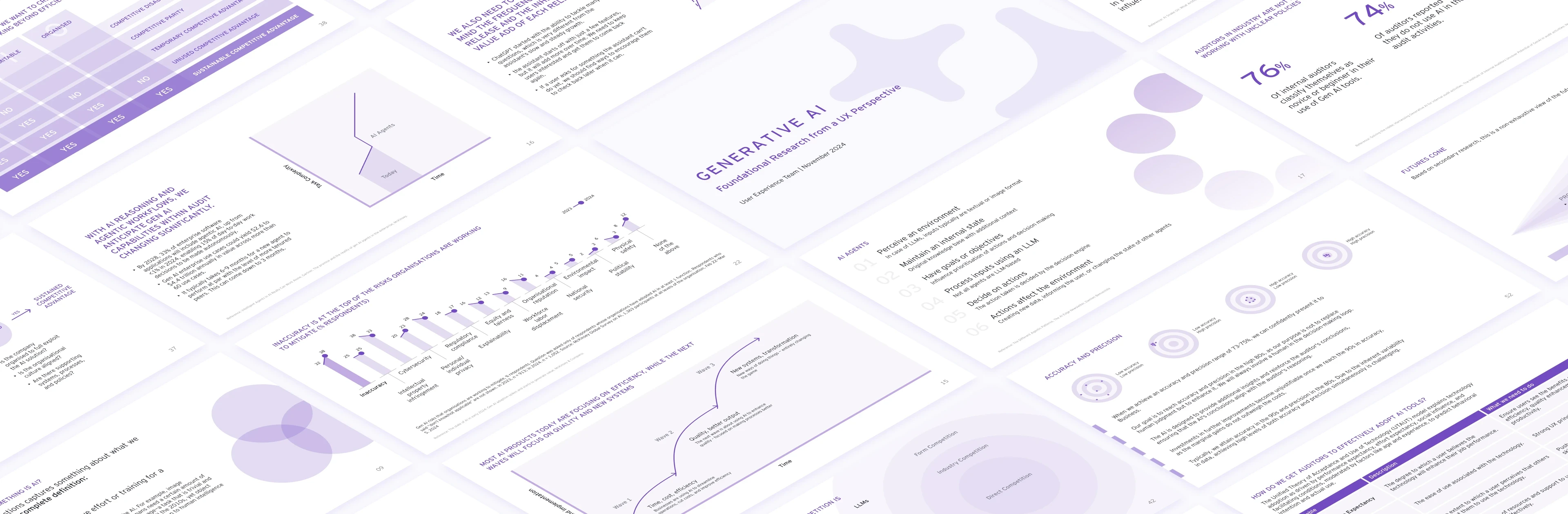
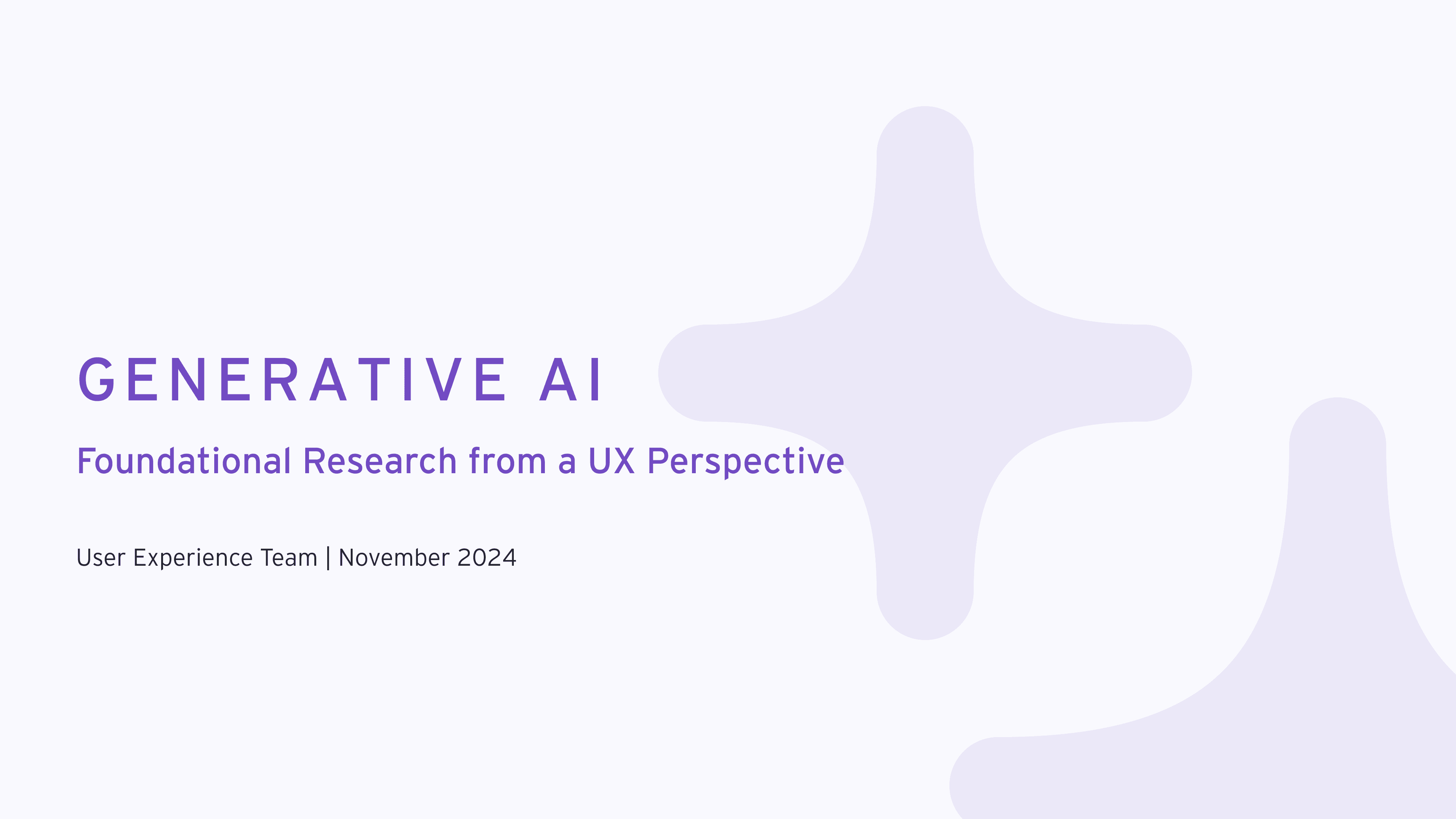
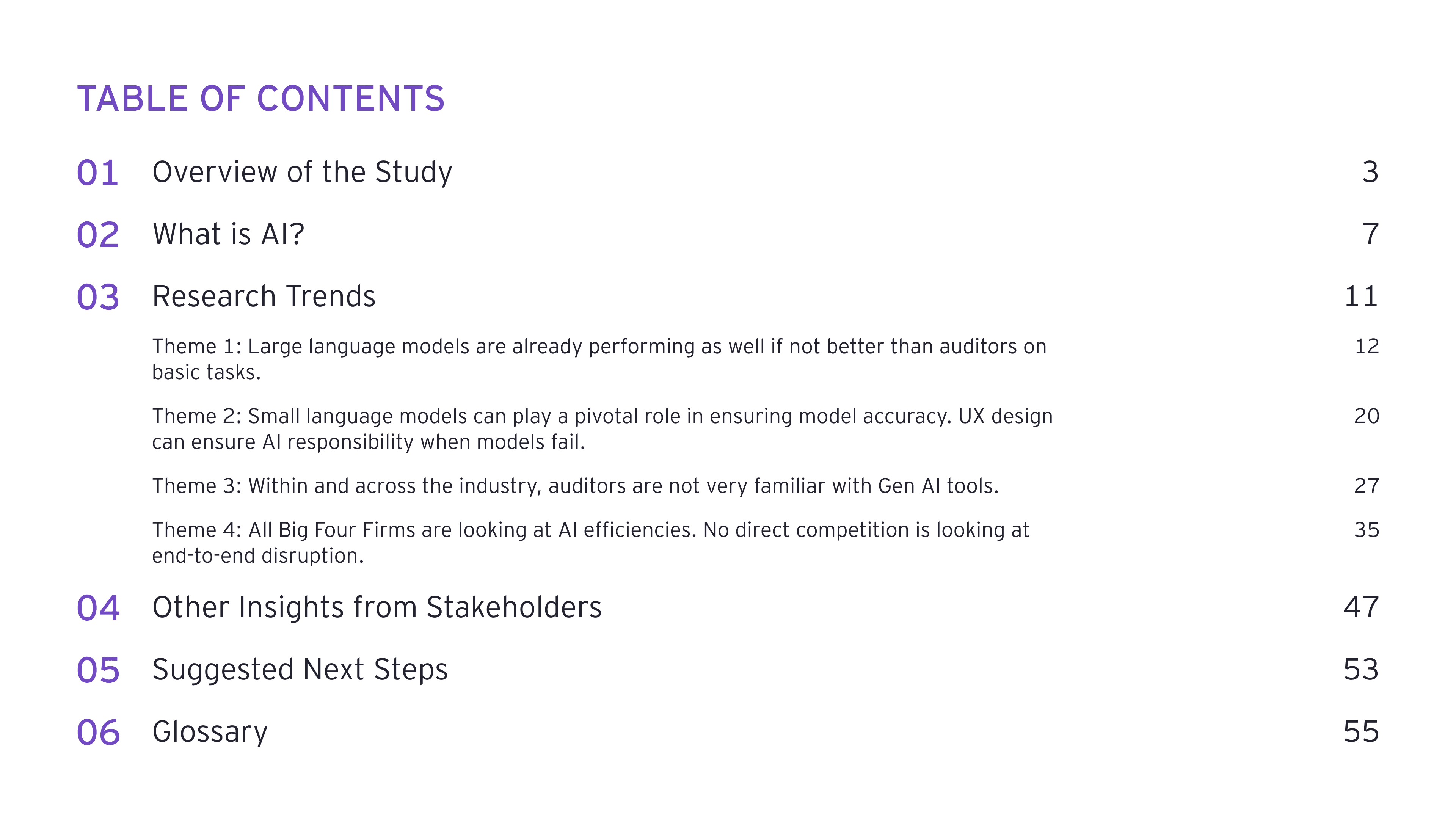
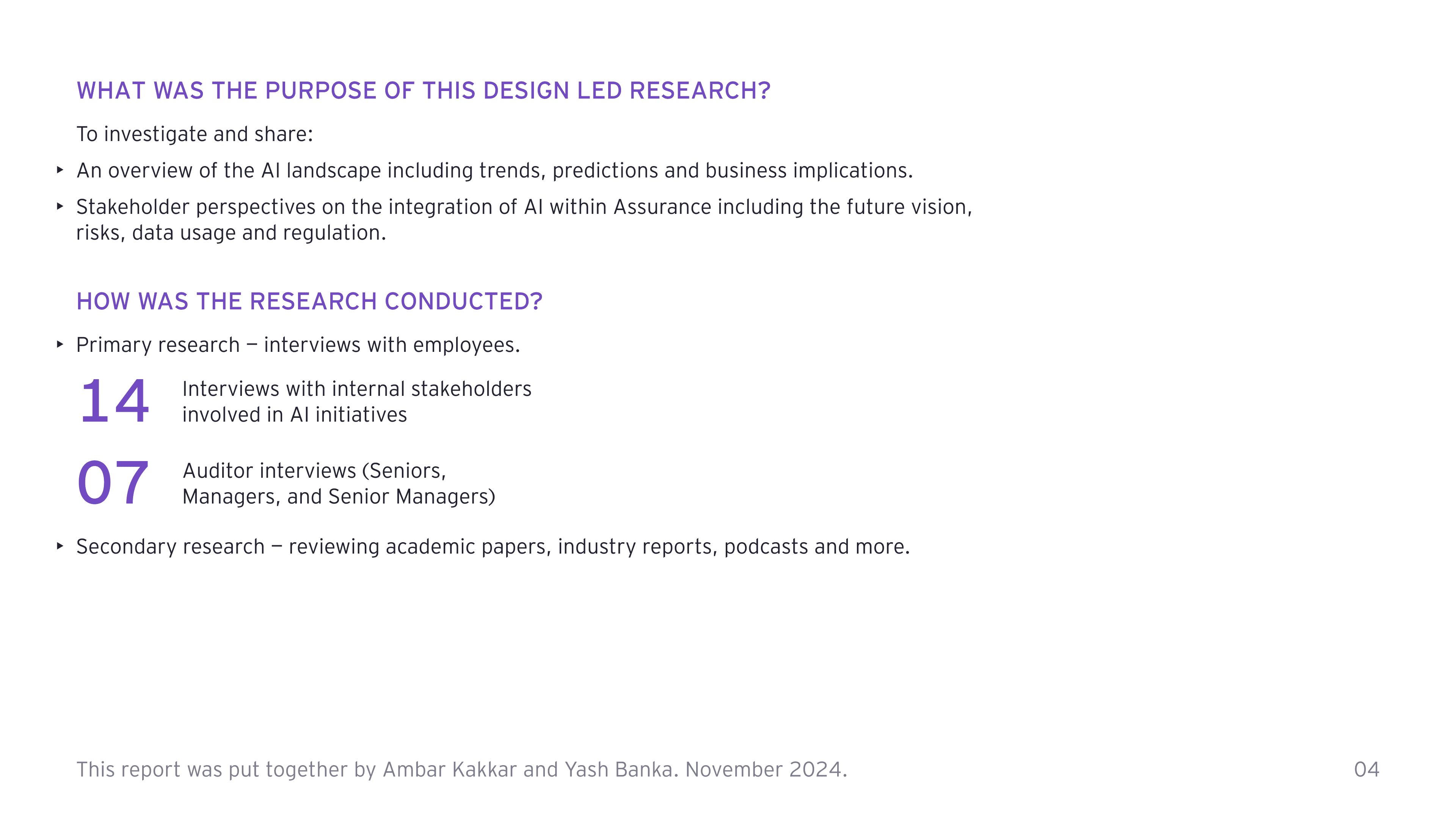
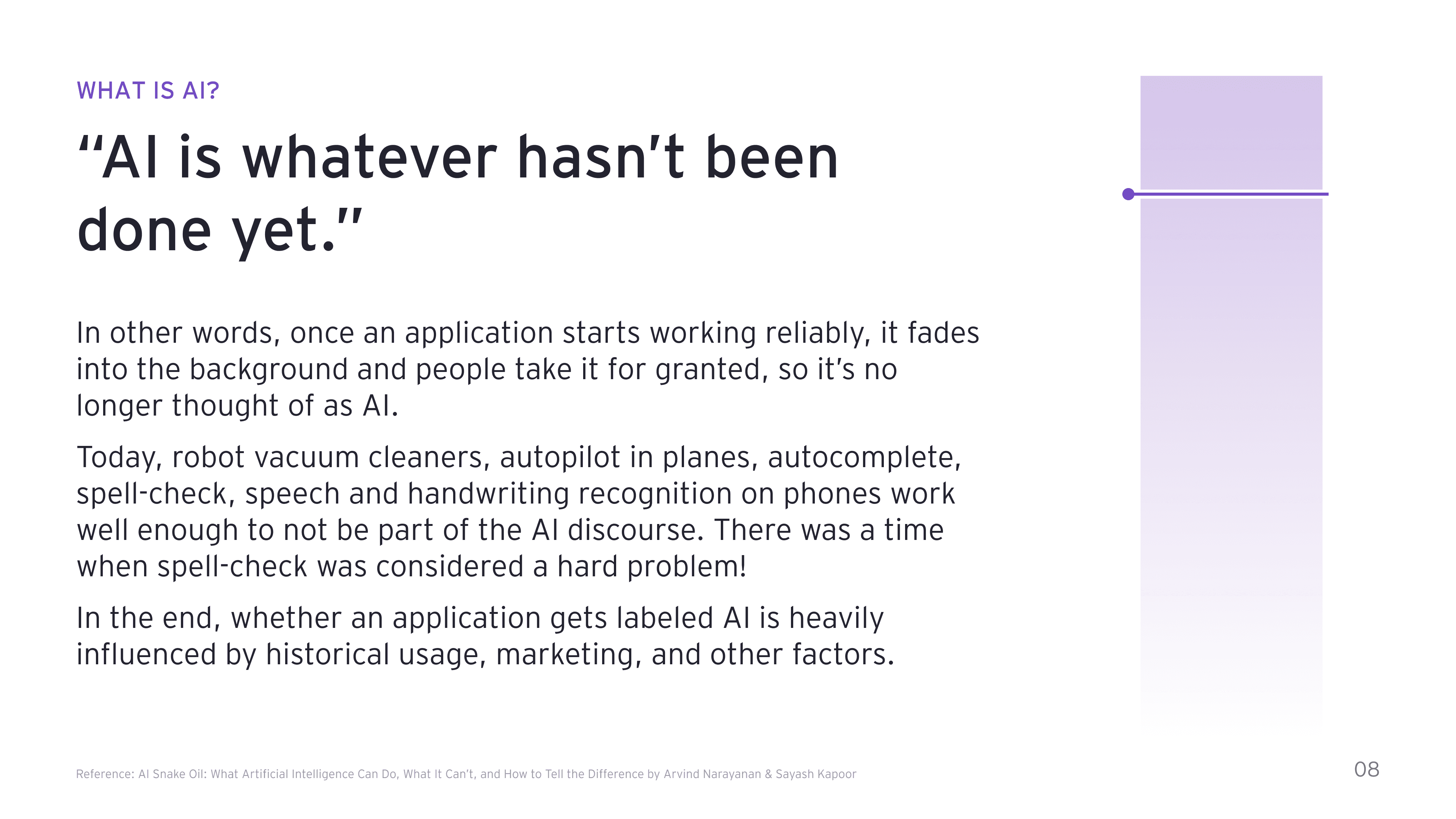
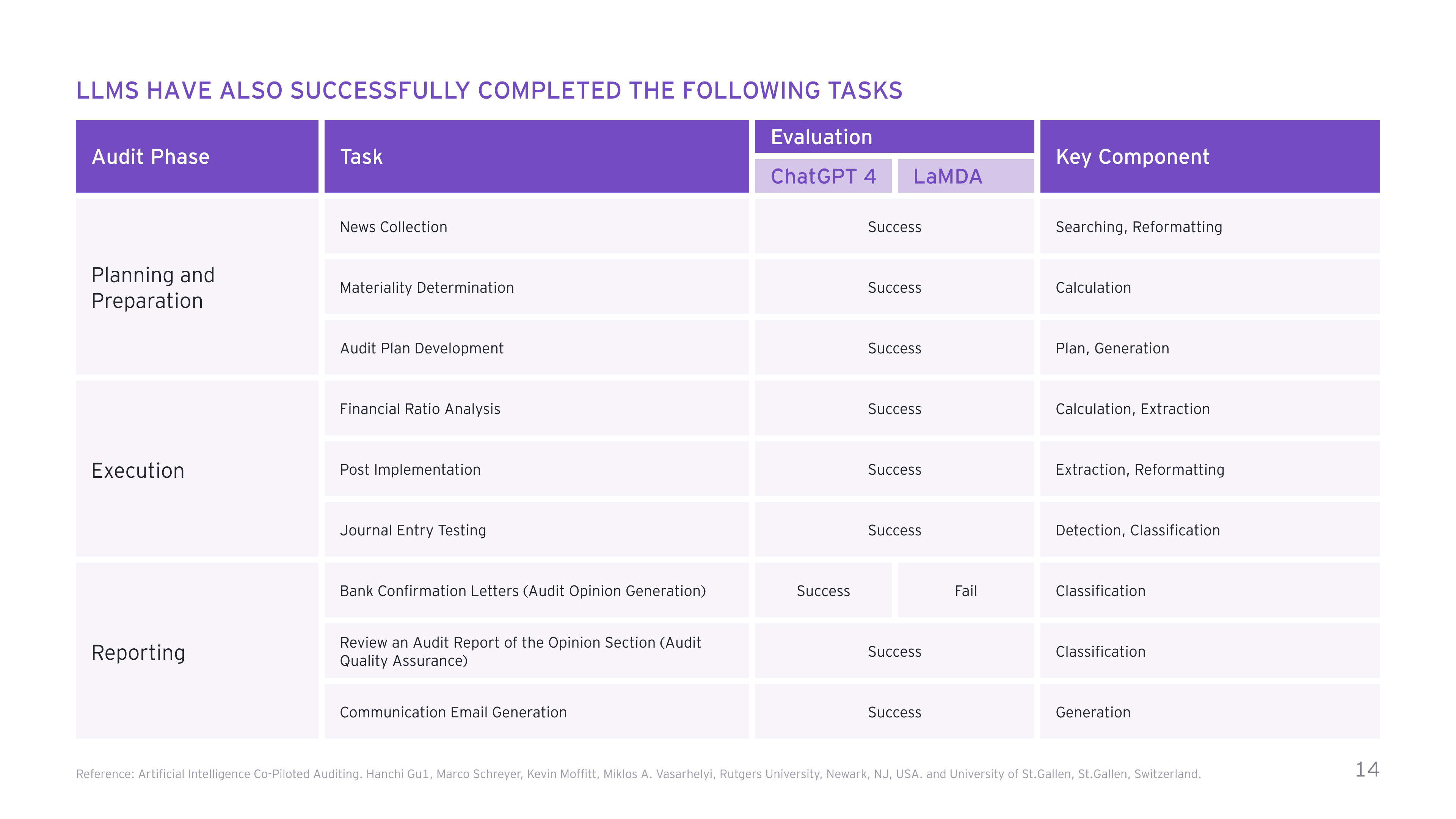
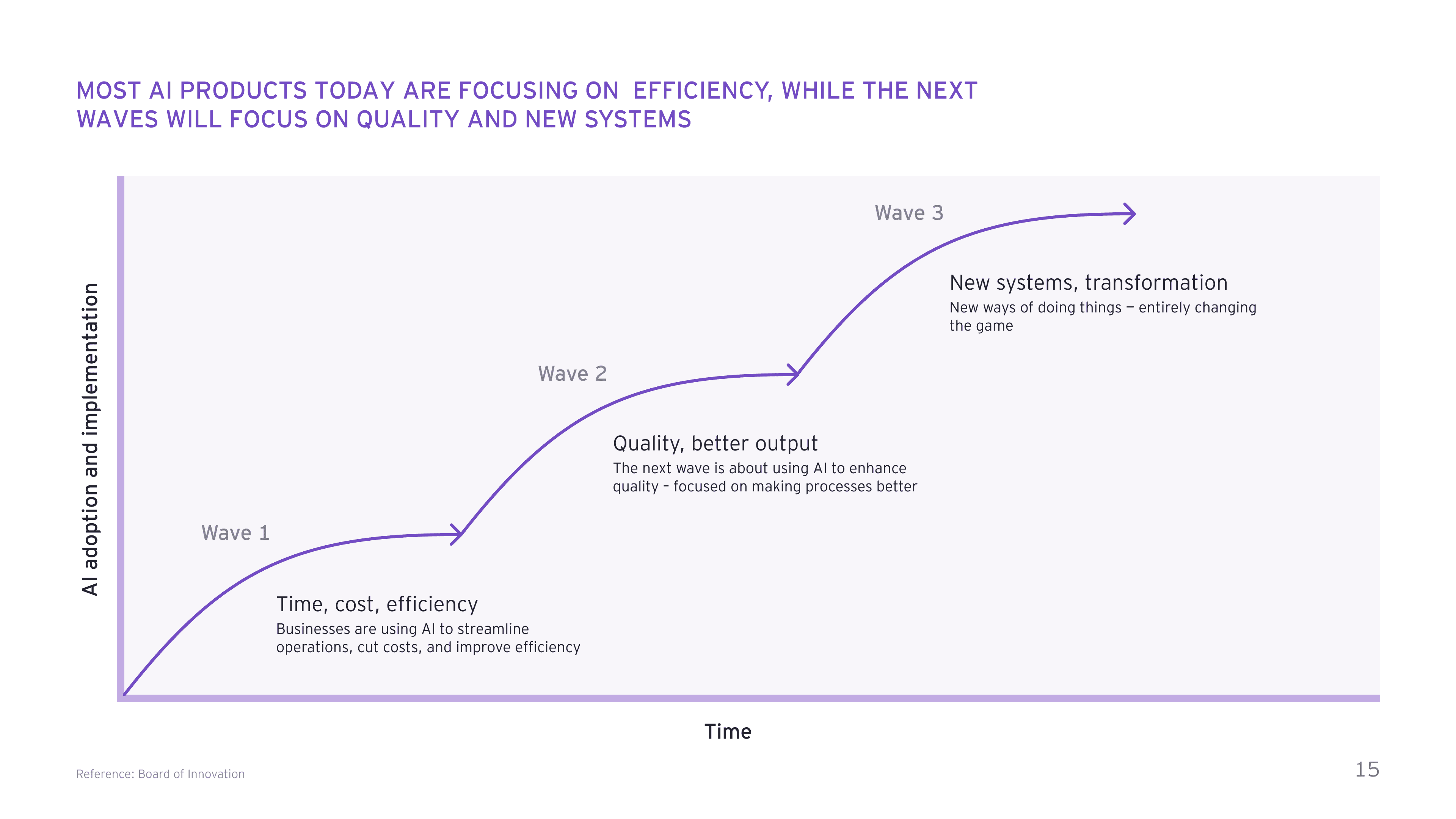
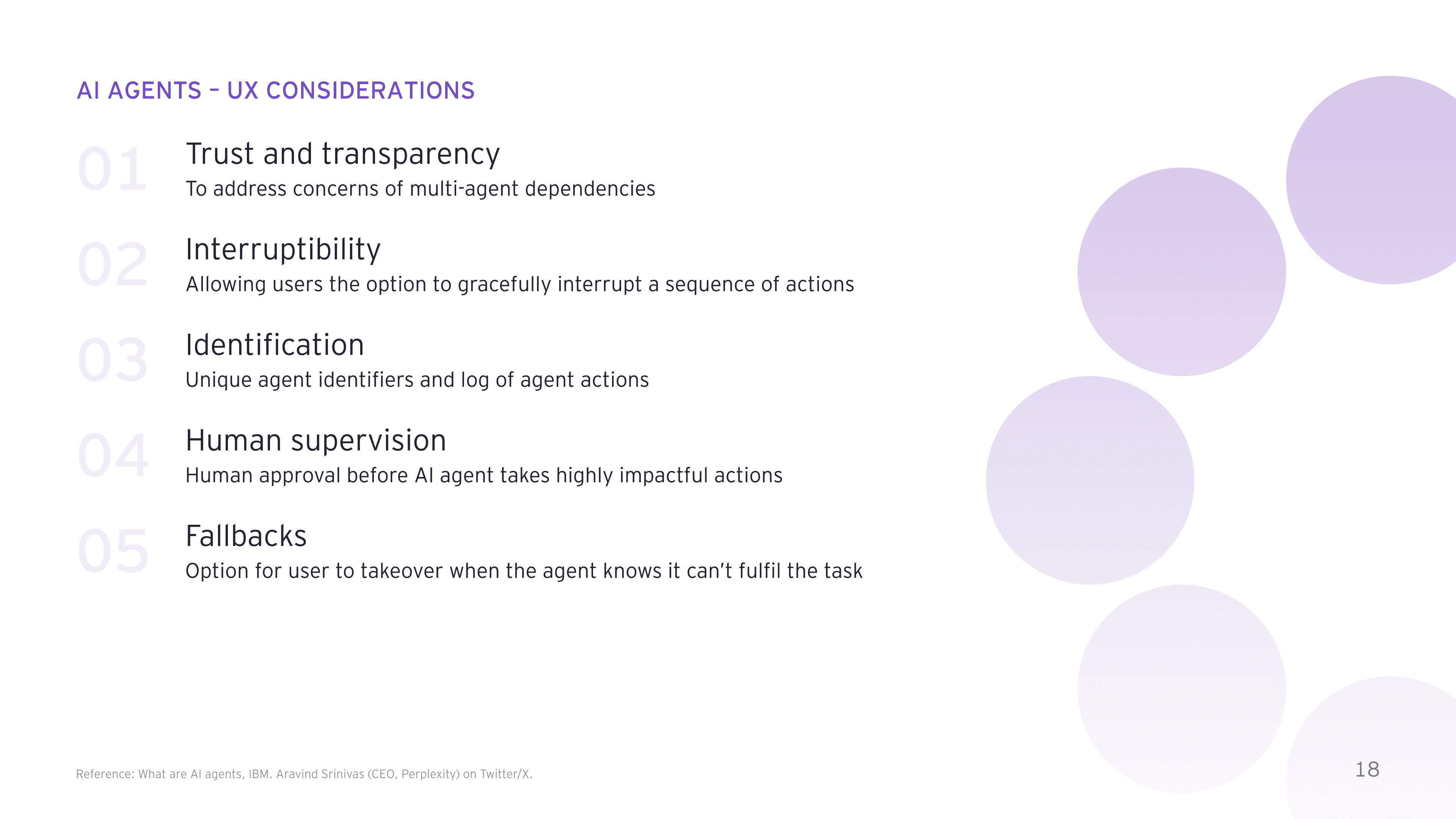
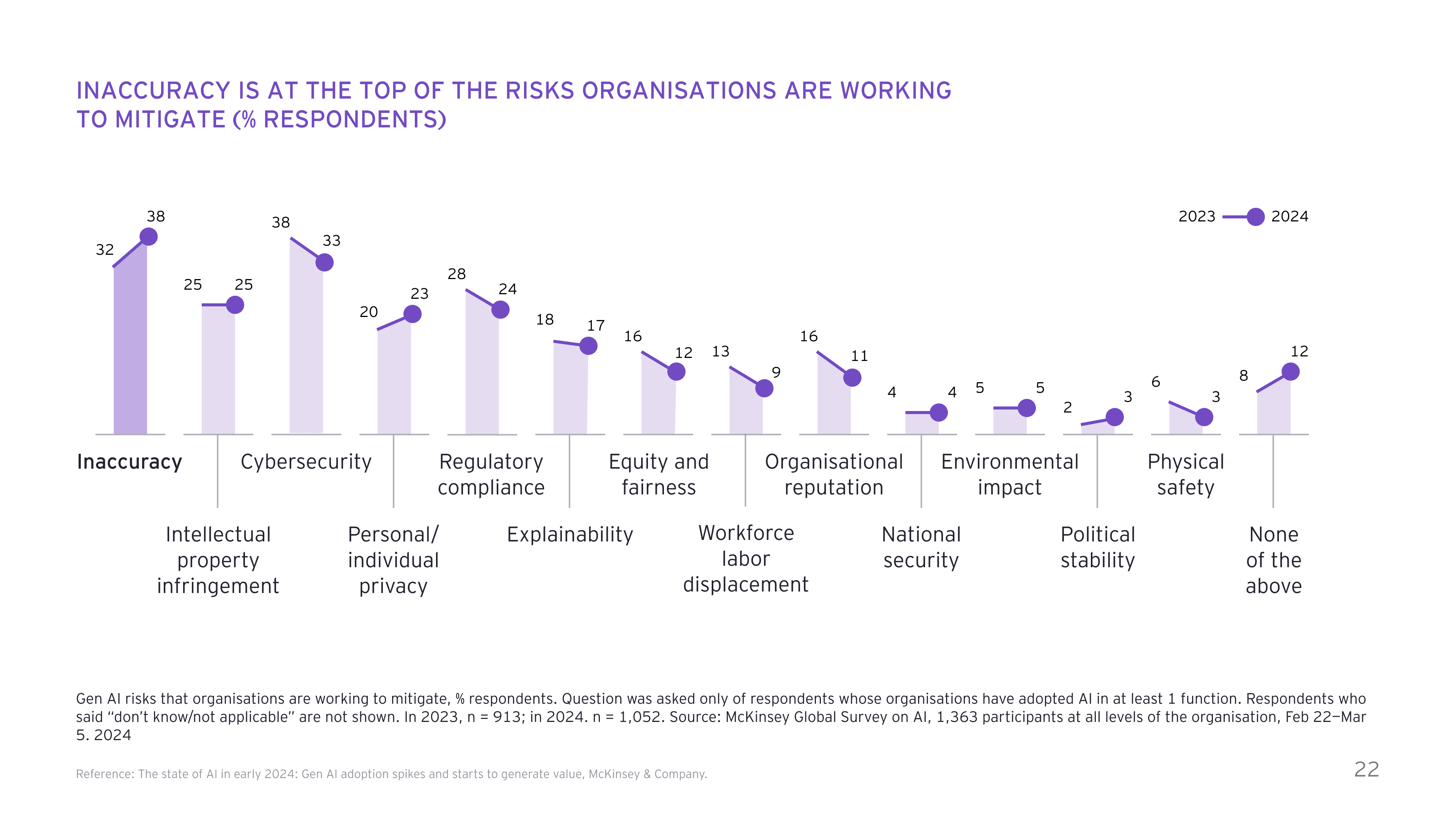
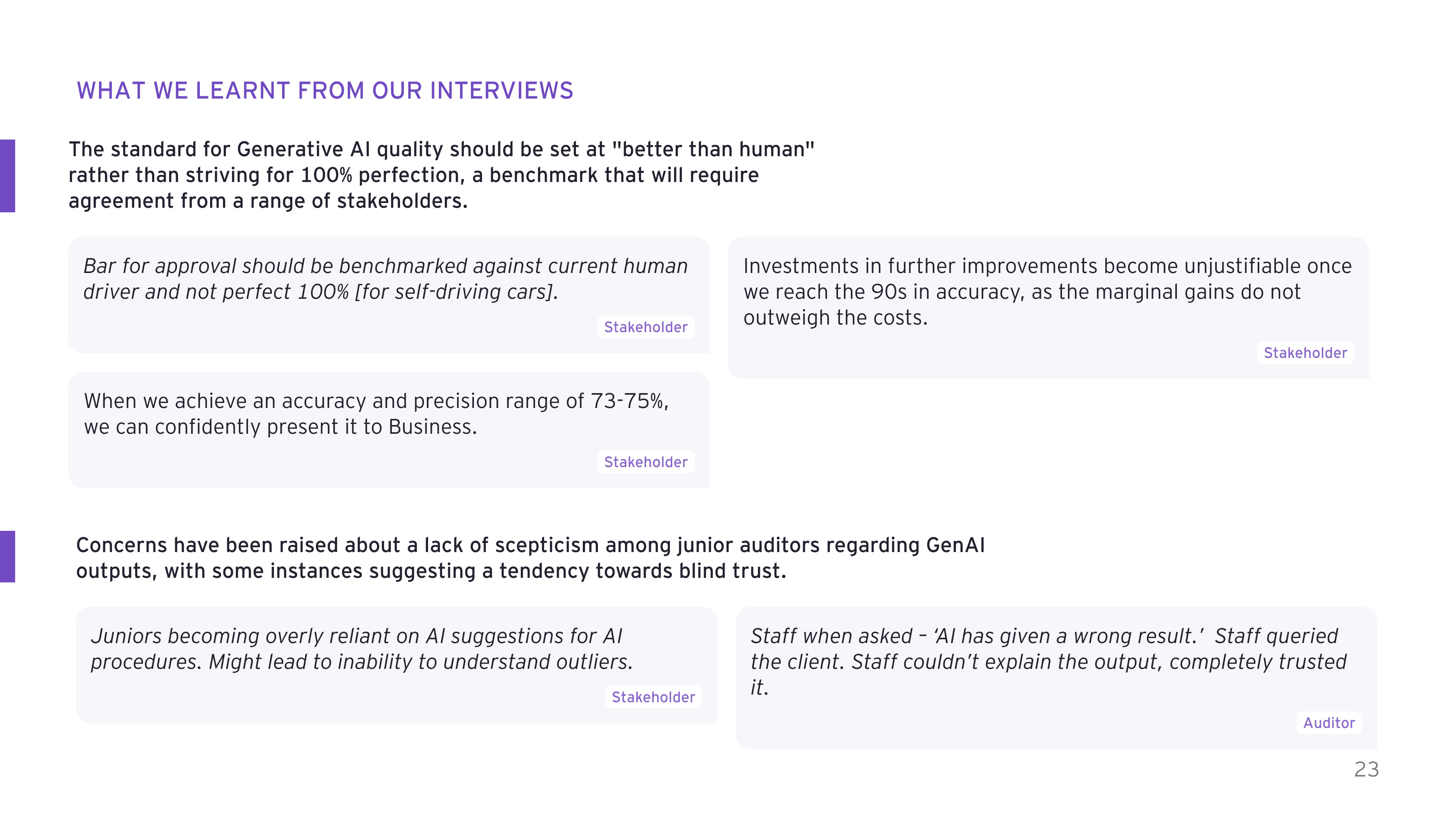
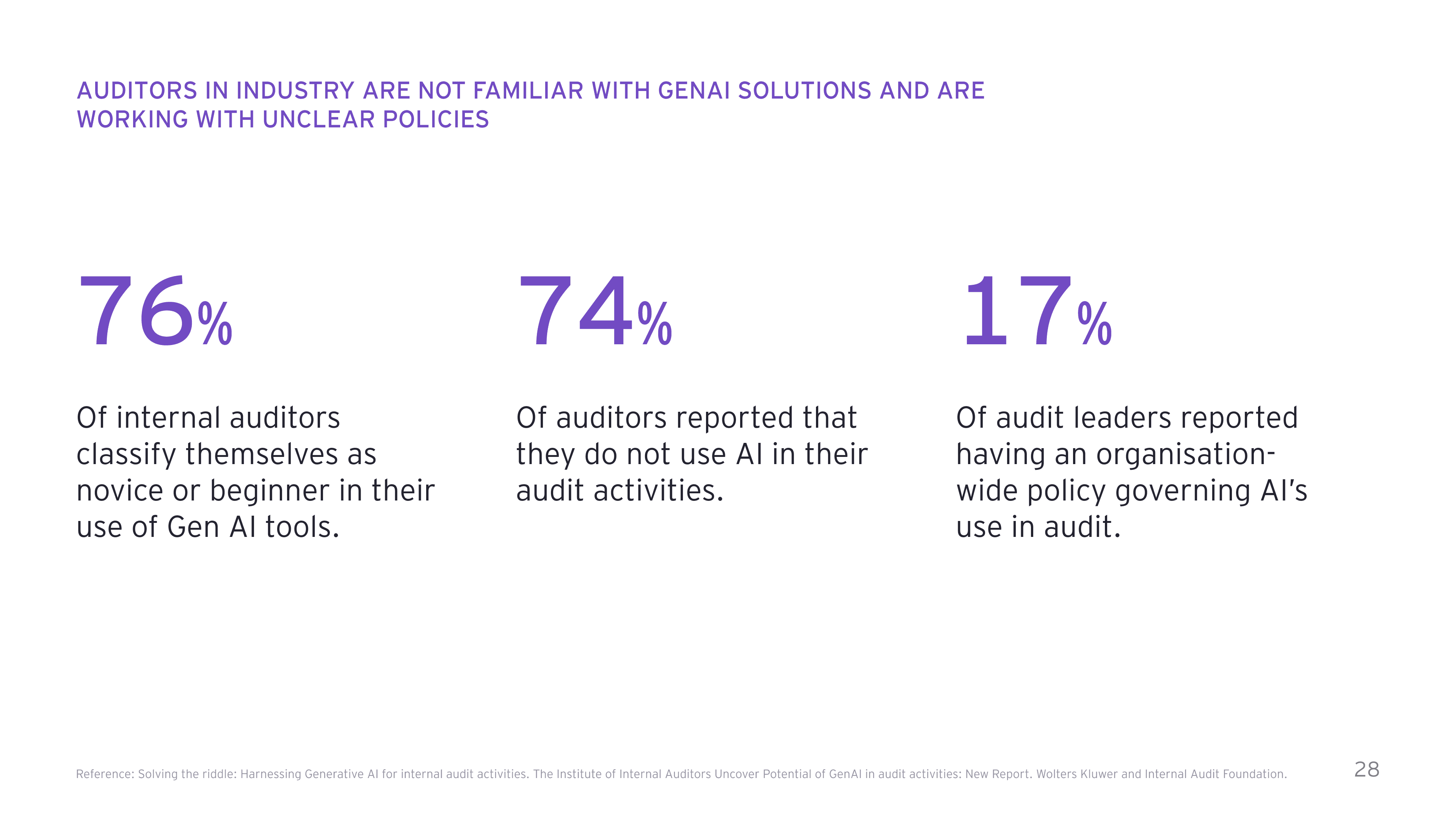
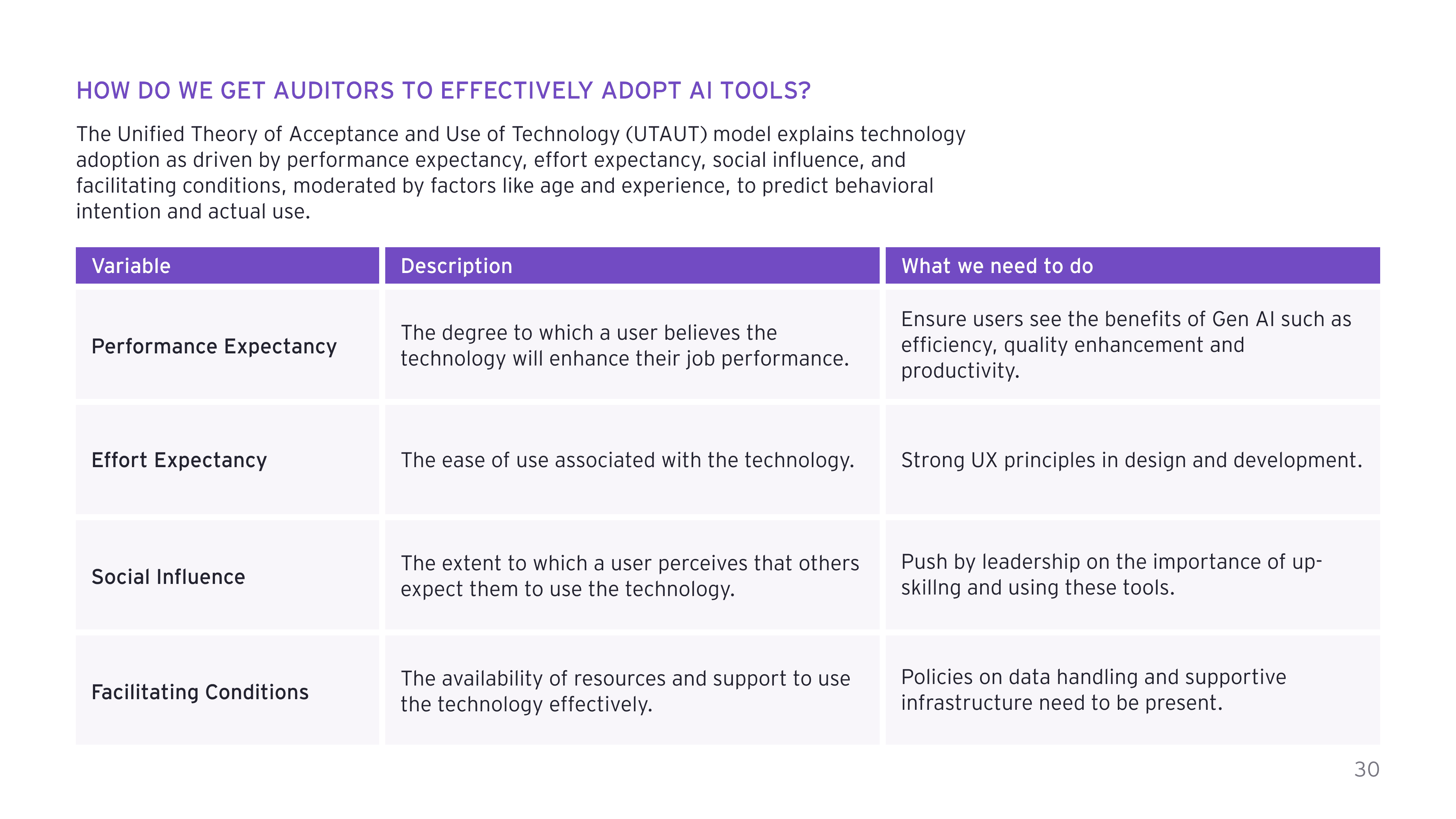
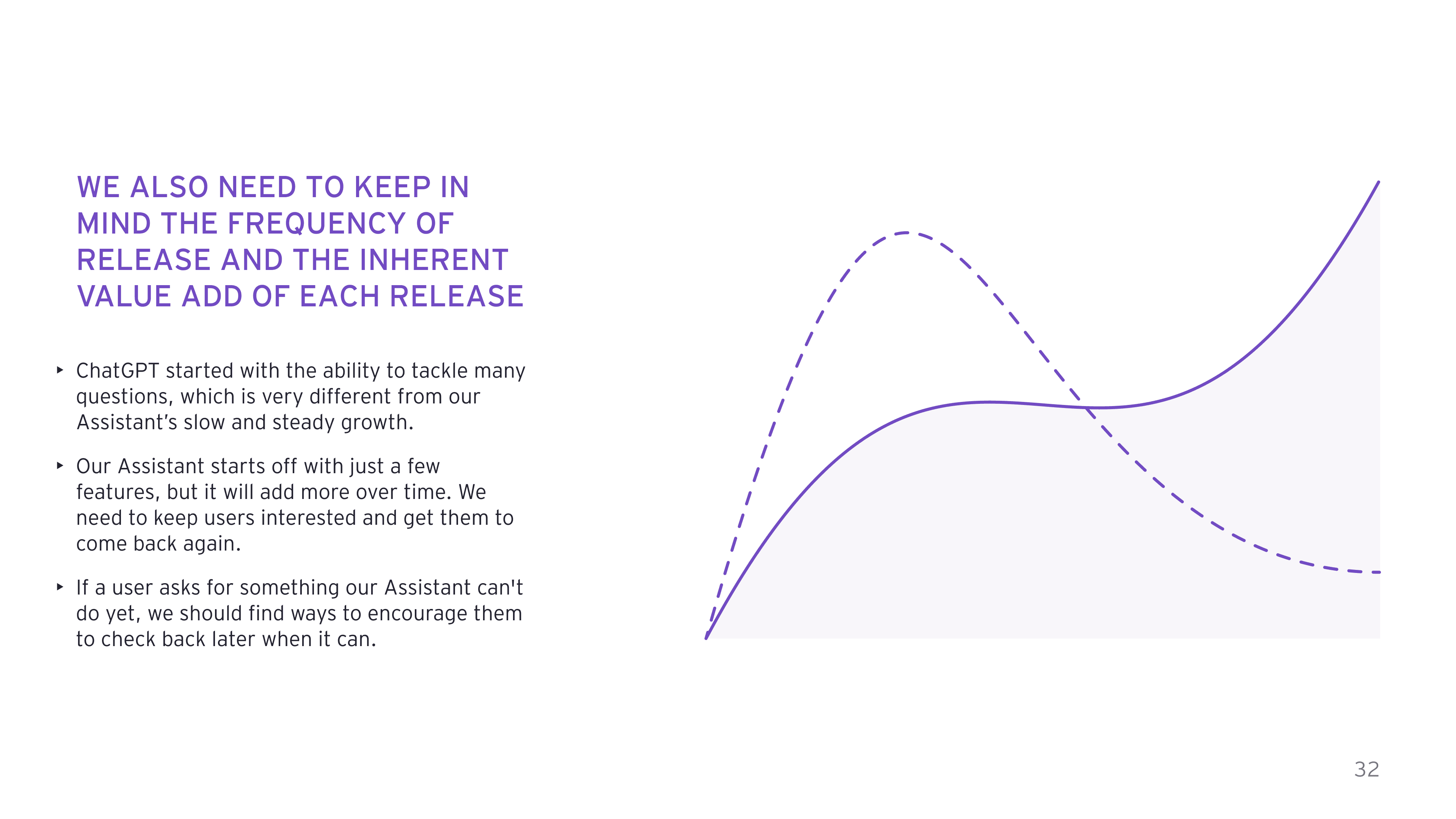
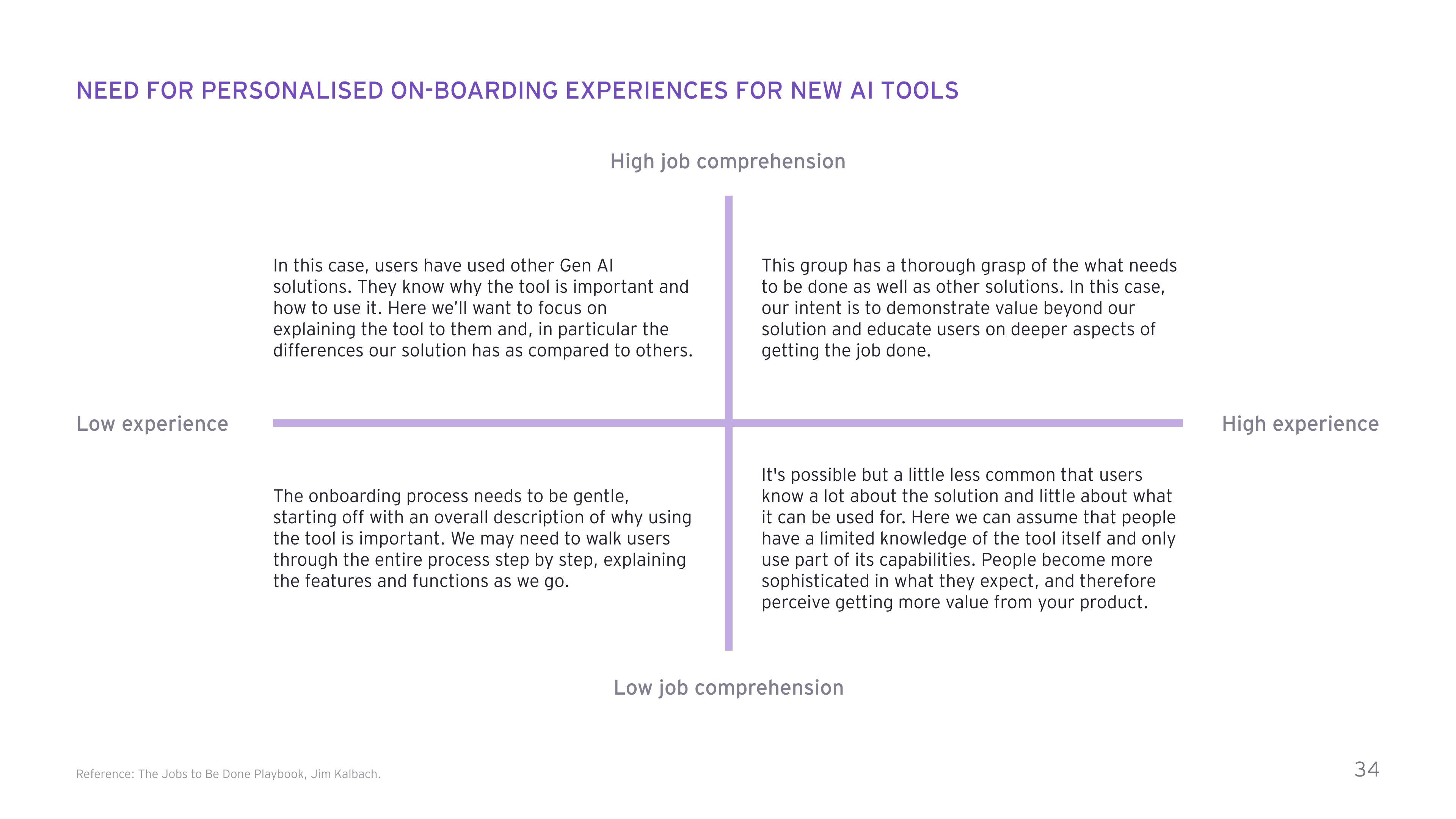
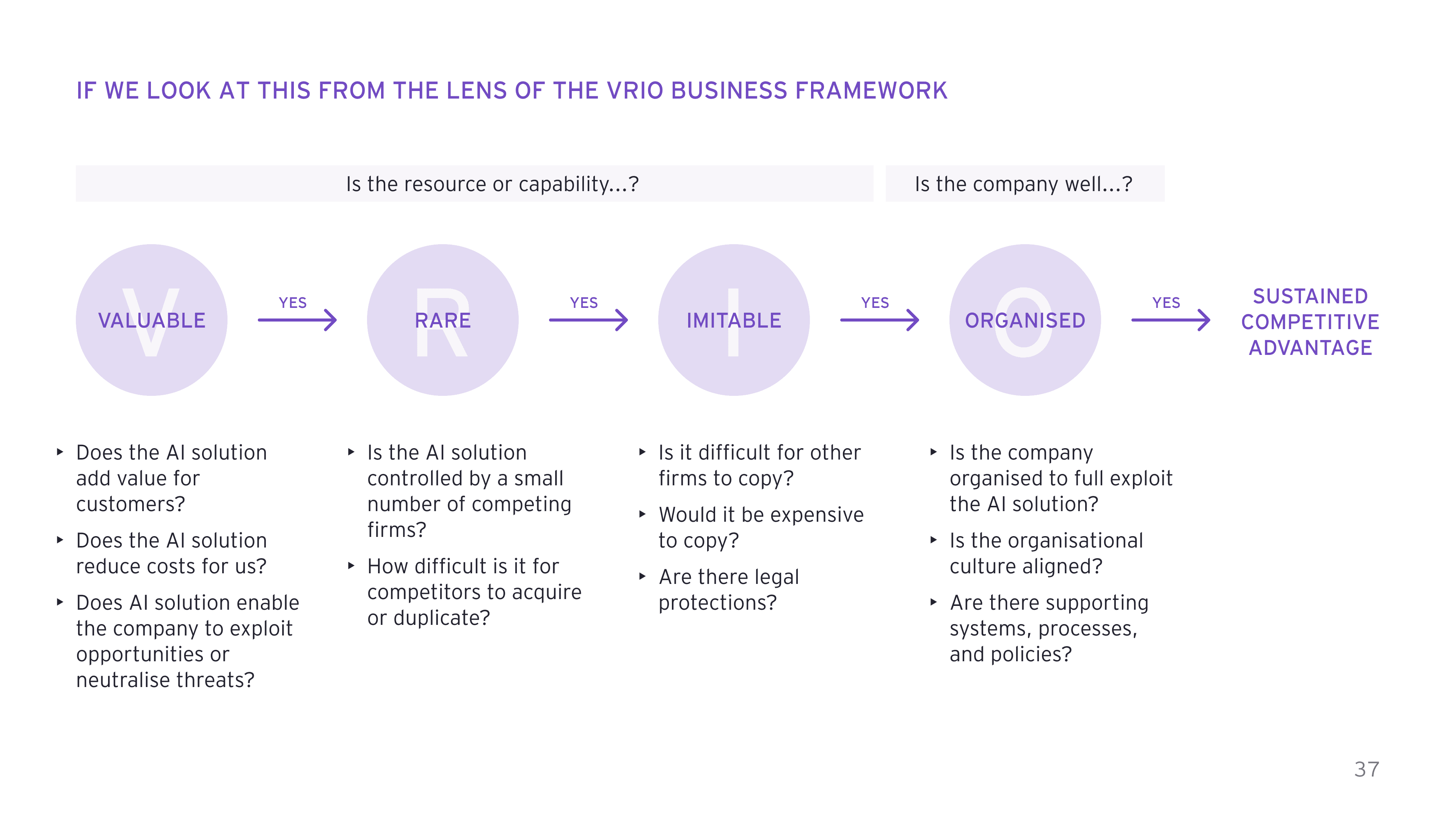
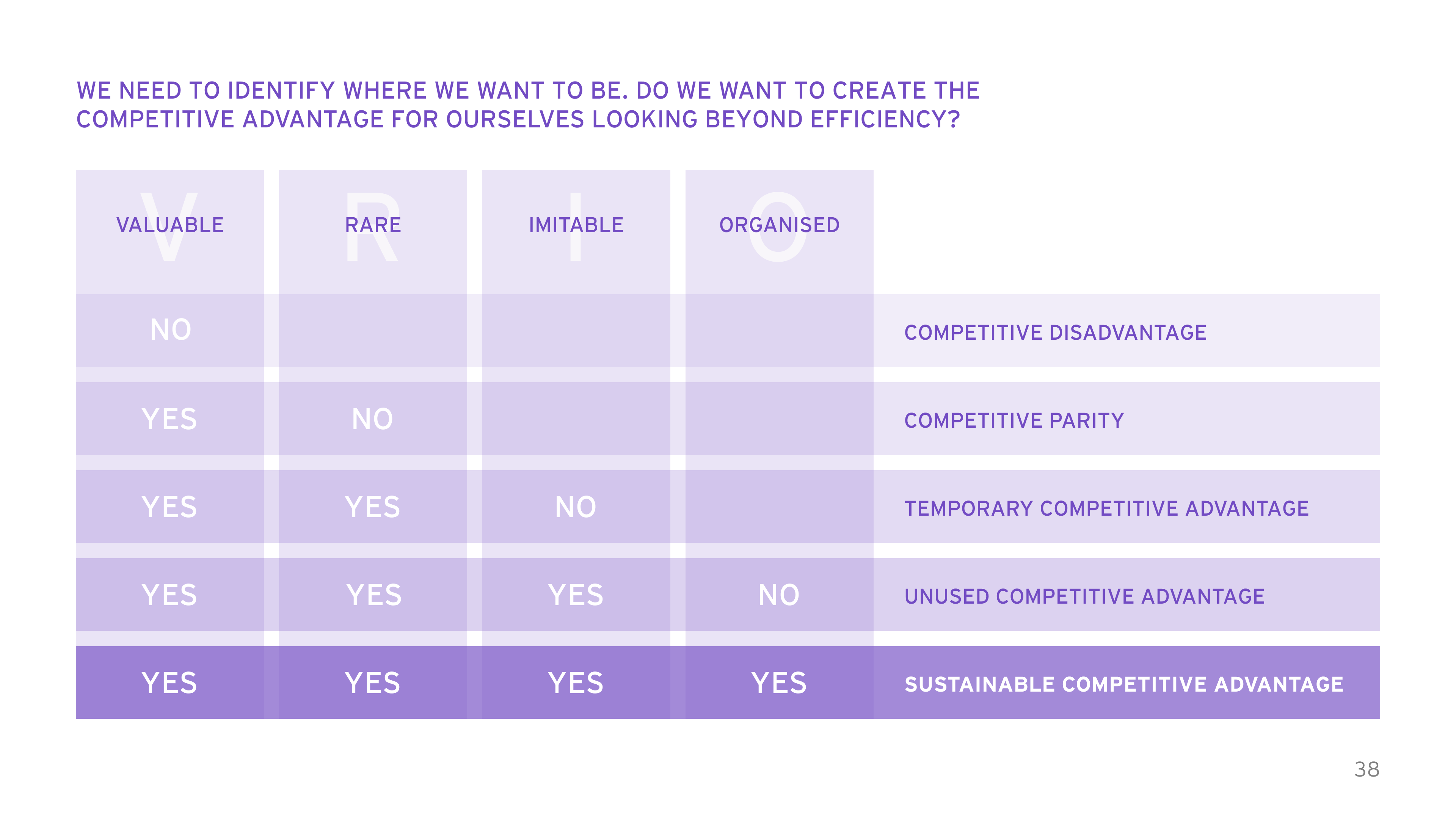
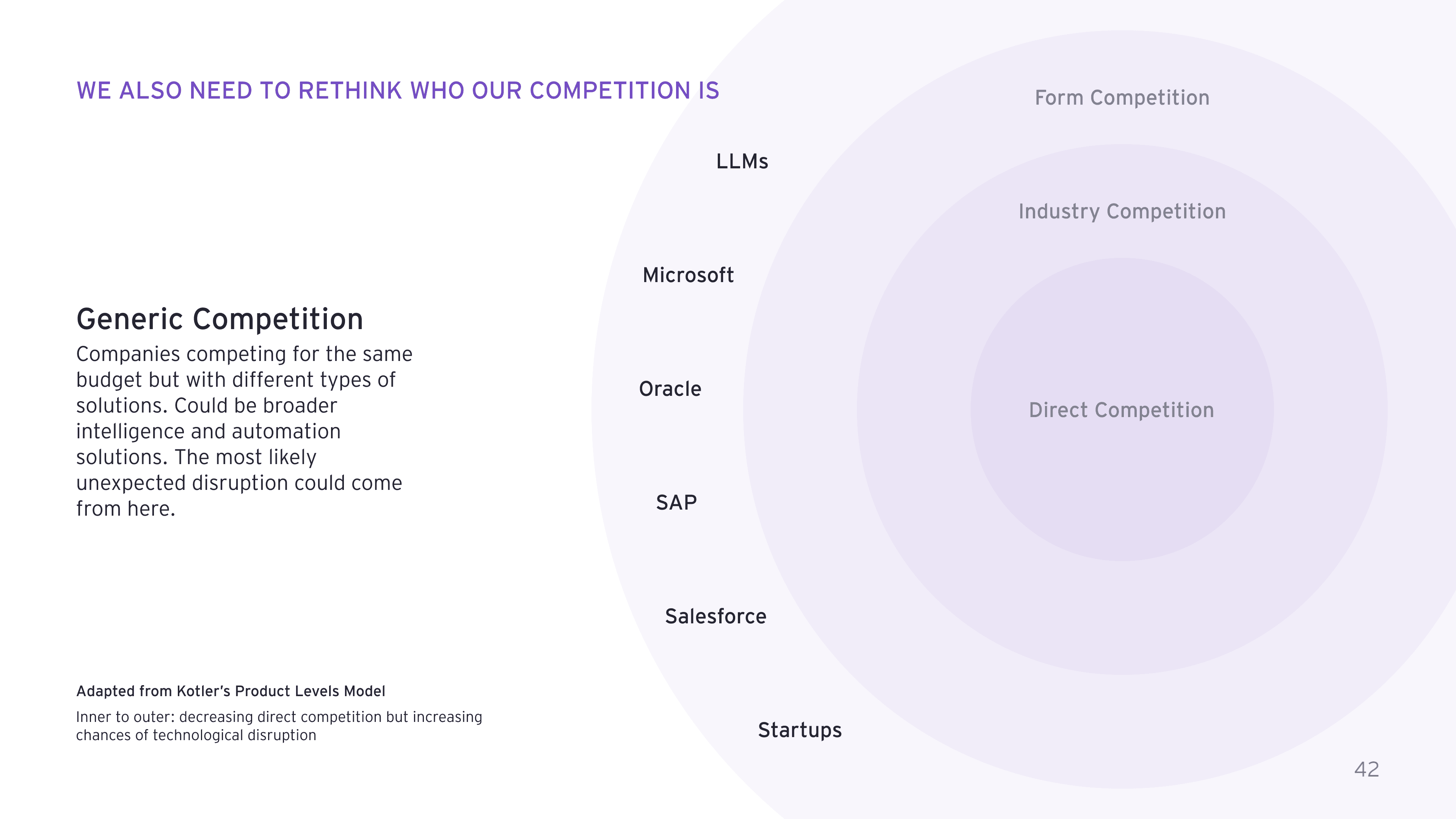
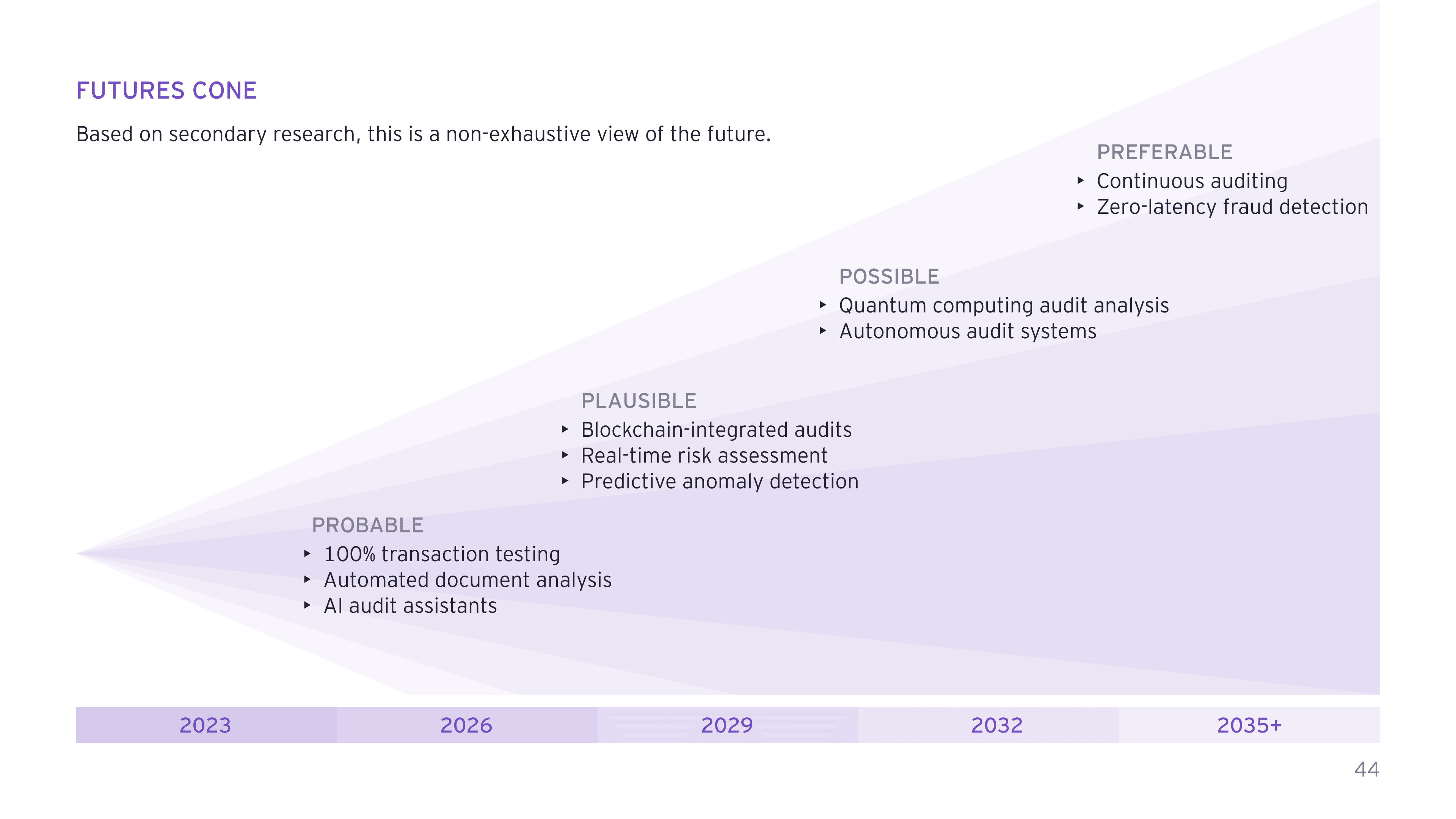
We produced a sixty-page report covering LLM capabilities in audit procedures, UX considerations for agentic workflows, risk mitigation strategies, technology adoption patterns, and a competitive scan across the GenAI assistant landscape. Every section was oriented toward decisions we'd need to make: which interaction models to build on, where the failure modes were, and what trust had to look like for professionals in a regulated environment. It became the foundation for both the assistant and the multi-agent framework.


Assurance Assistant
The assurance team had already tried to build a GenAI assistant. Leadership rejected it. The interface was tab-heavy, the interaction model was clunky, and the experience lacked the quality needed to generate confidence in a room of senior partners. We were brought in to start again with two weeks to deliver something that would pass leadership review and reignite excitement for what was possible.
Research
I benchmarked the leading GenAI assistants, ChatGPT, Claude, Perplexity, Gemini, Copilot, and others, to map the interaction patterns and design decisions that made them work. That grounded the design direction before a single screen was conceptualised.
Interaction panel
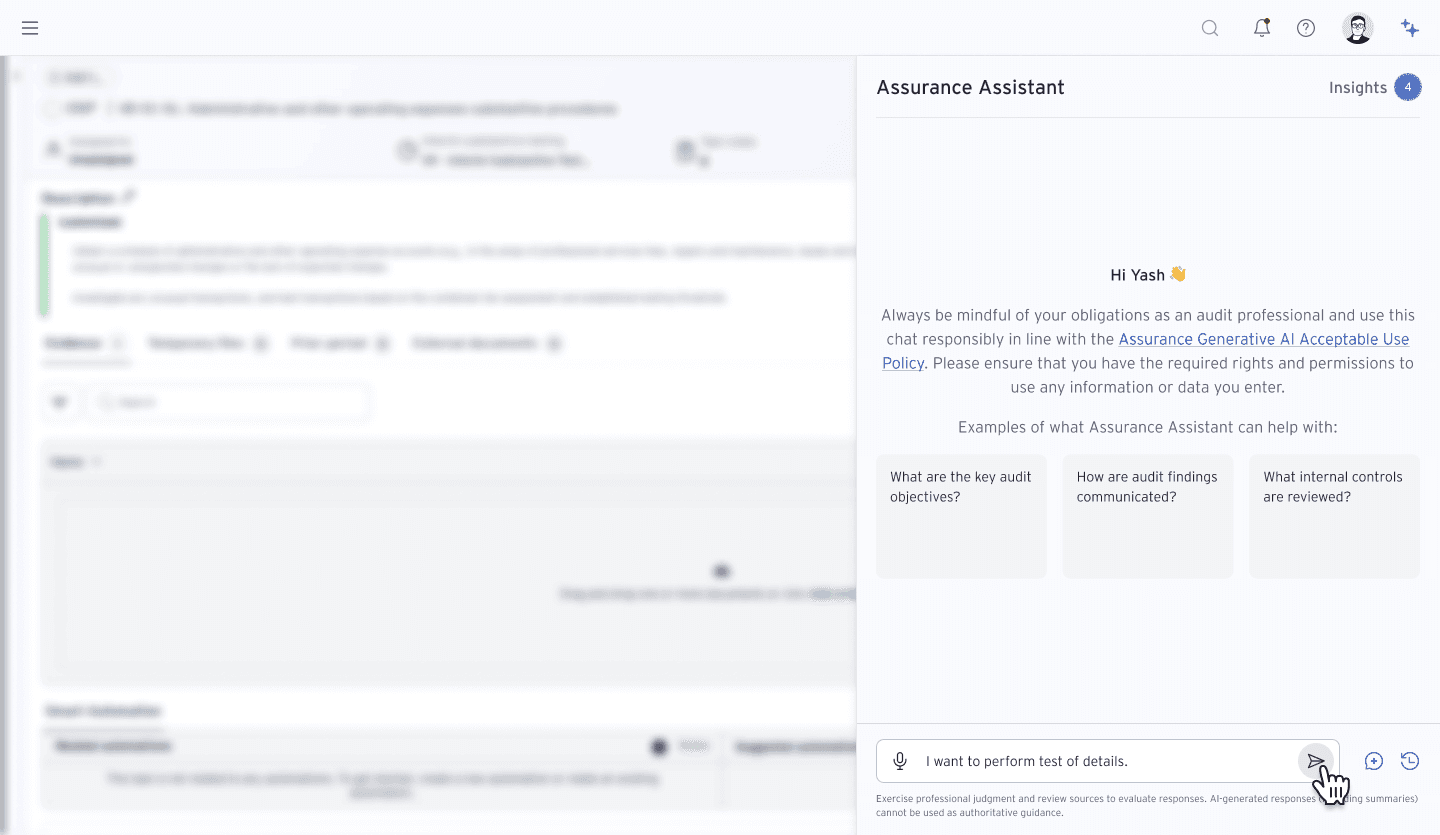
The tabular insights layout was replaced with a fluid panel. A button in the top-right of the chat enabled a smooth transition to a dedicated insights view, letting users stay in the conversation while supporting deeper exploration when needed. The rigid message containers that made the original feel stiff were removed, creating a more natural conversational flow.
The original opened with a large video carousel explaining auditing standards. Sample prompts replaced it: lightweight and immediately actionable, making the assistant's capabilities obvious without explanation.
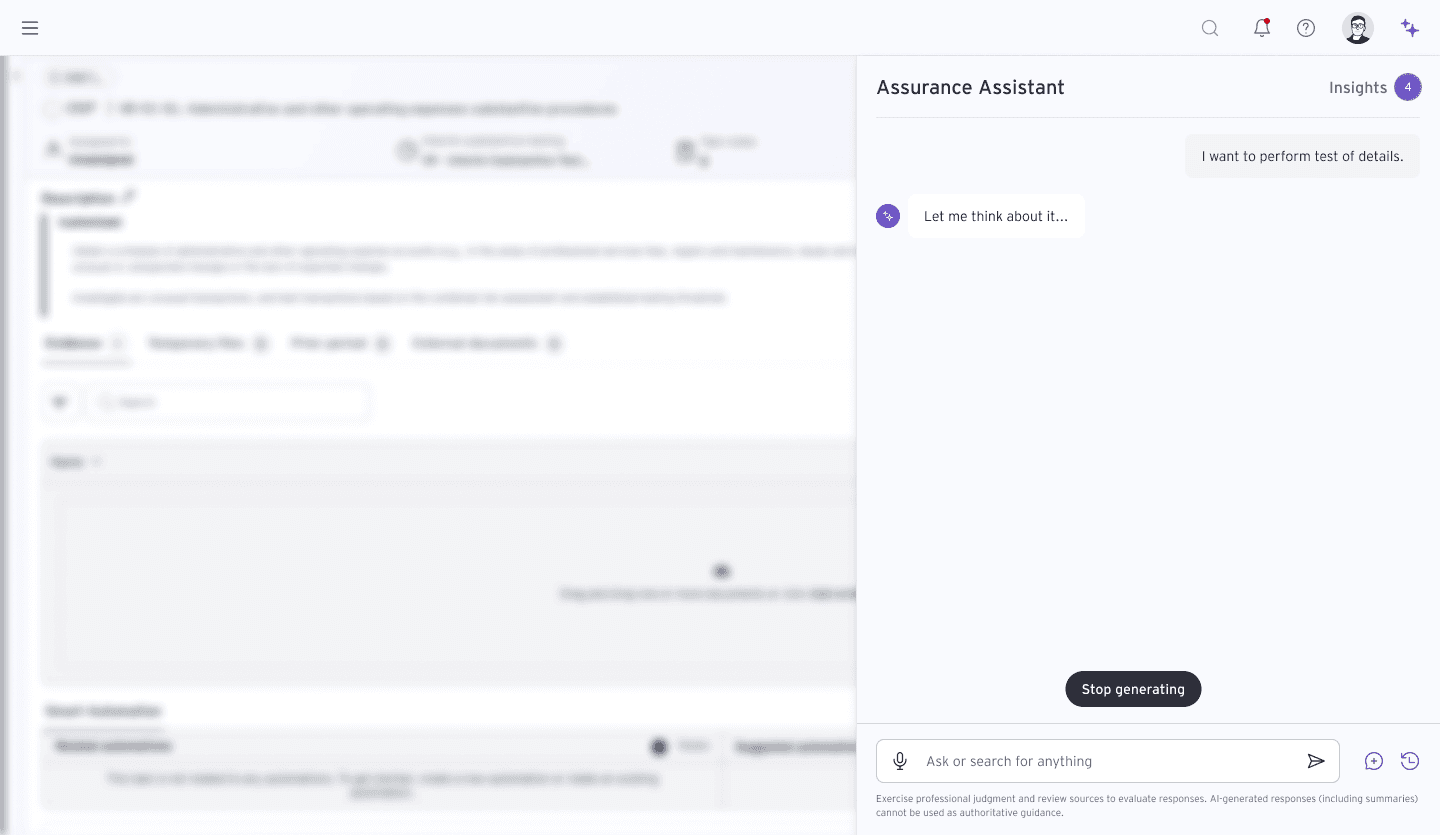
The system now surfaced real-time feedback inline: a generation indicator and a gentle glow on the insights count, giving users awareness without interrupting the conversation — something the previous version lacked entirely.
Testing result
User testing was conducted by a separate research team.
Net Promoter Score
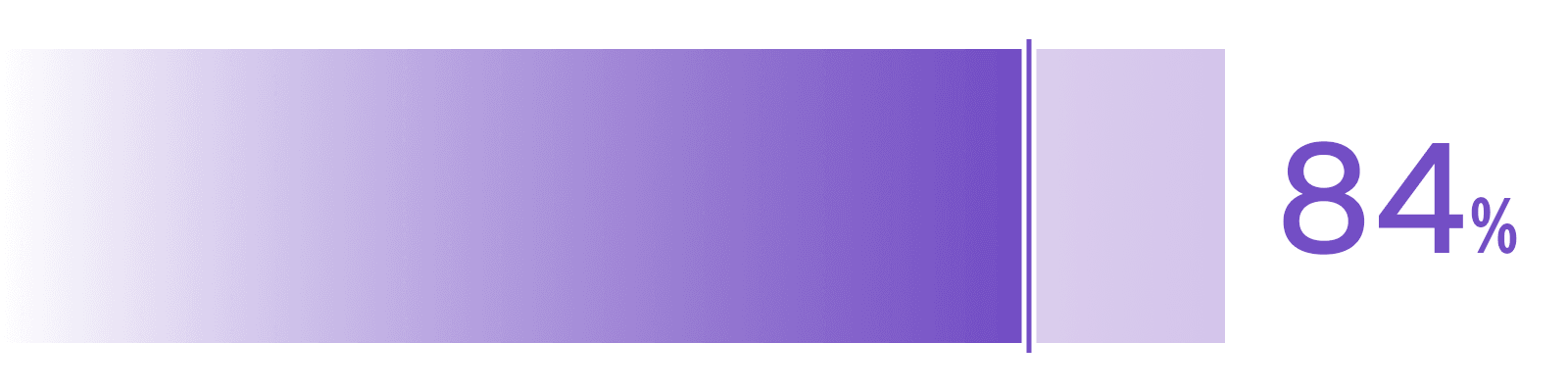
The NPS came in at 84%, against a firm benchmark of 70% for high-performing products and a sector average of 60%.

Usability
100% of users appreciated seamless usability within the assistant.
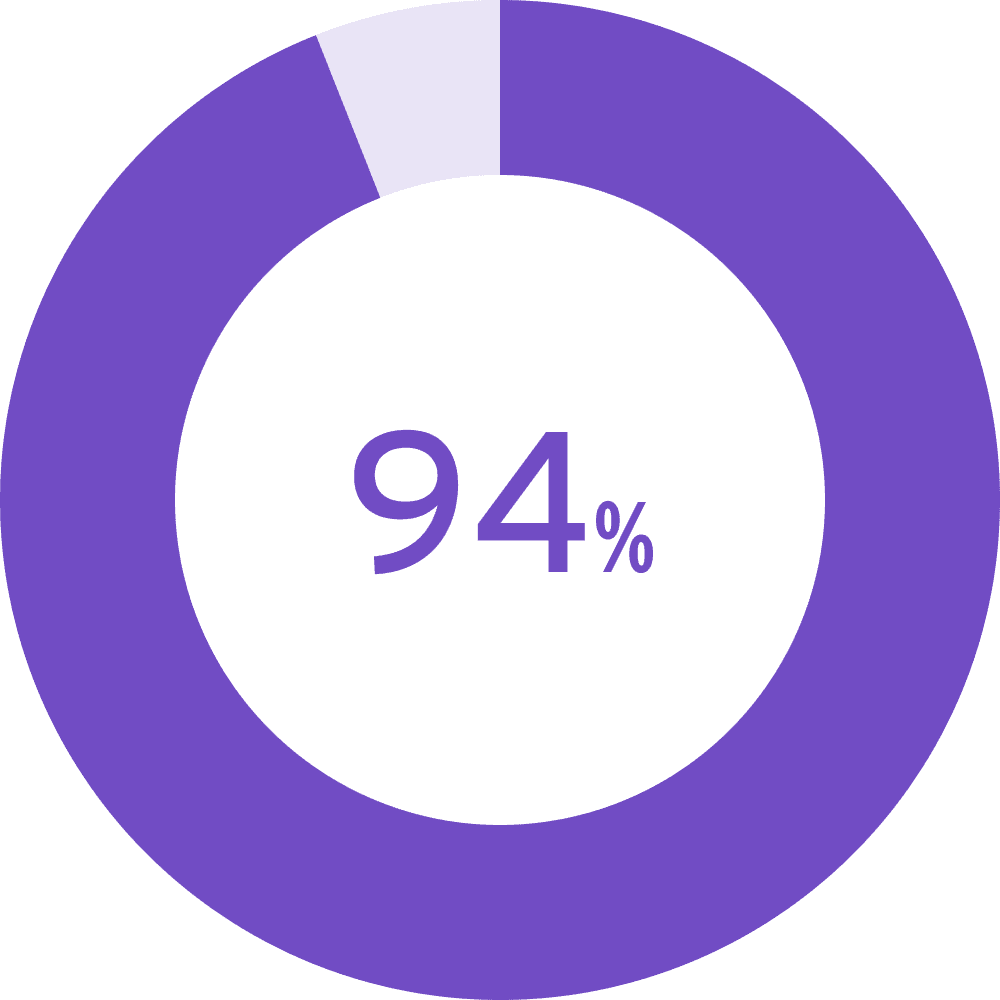
Confidence
94% reported feeling more confident in client meetings after using the assistant.
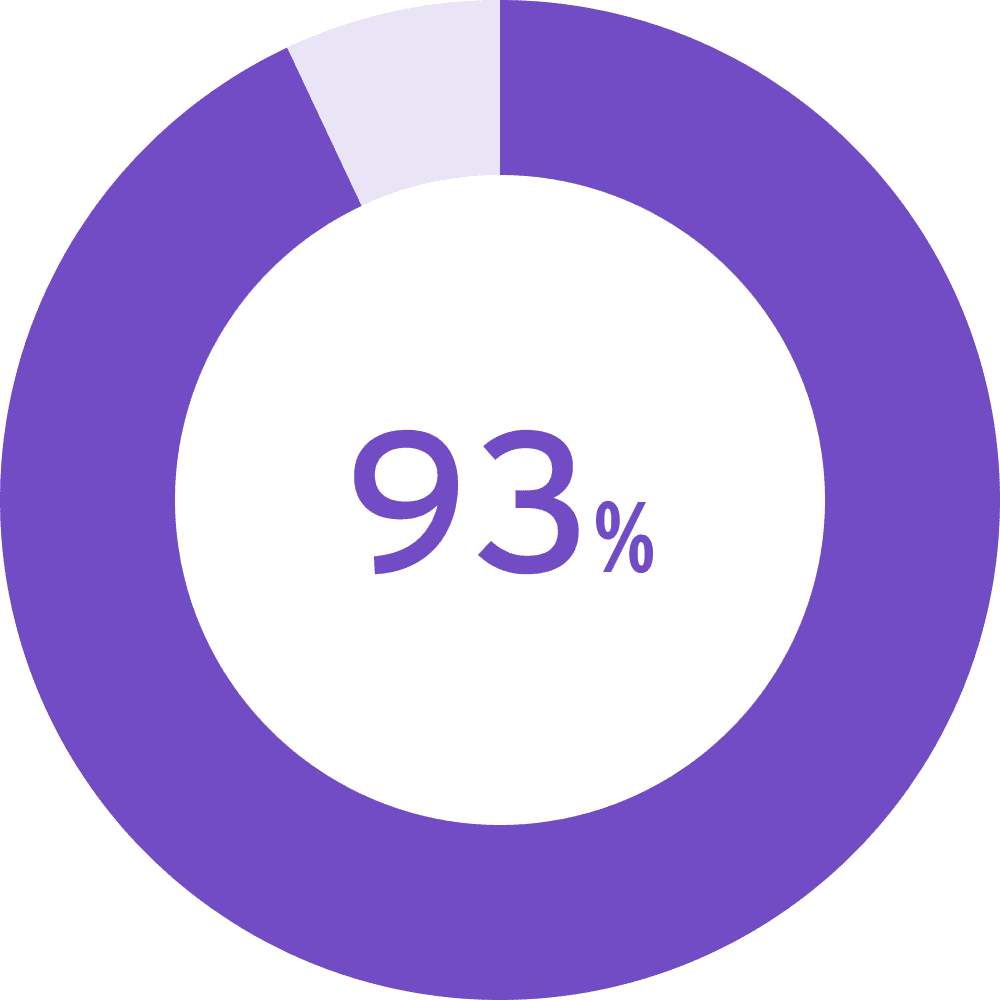
Adoption
93% said they would integrate the assistant into their regular workflows.
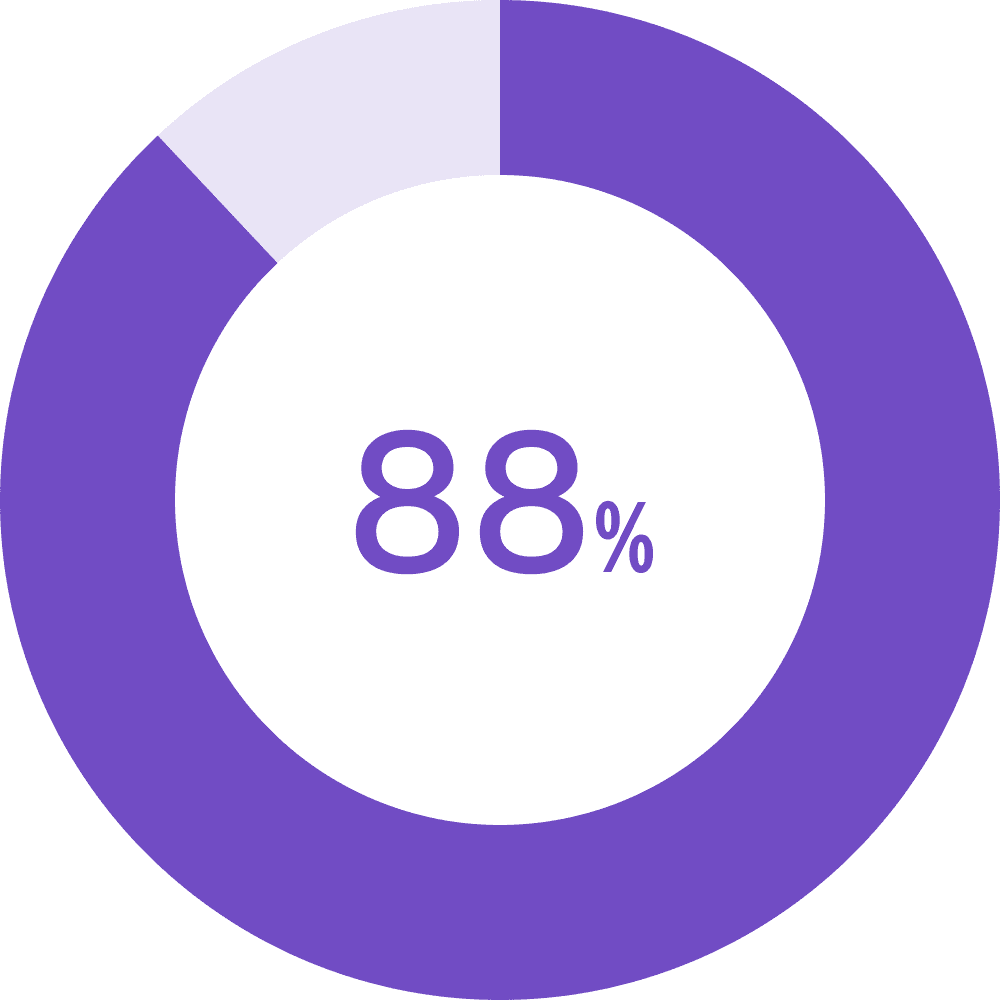
Time Savings
88% reported time savings in locating relevant documentation.
Multi-Agent Framework
The assistant was one agent doing one thing. What came next was harder: a framework for multiple agents working together across complex, multi-step audit workflows while staying compliant with regulatory standards across 150 countries.
There was no shared design language for that yet. UX, technology, and business were all building toward the same system without alignment on what it should fundamentally be. Without that foundation, decisions about how to surface agent reasoning, handle errors, and sequence handoffs between agents would pull in different directions. The design work wasn't a set of screens. It was the principles the screens would be built on.
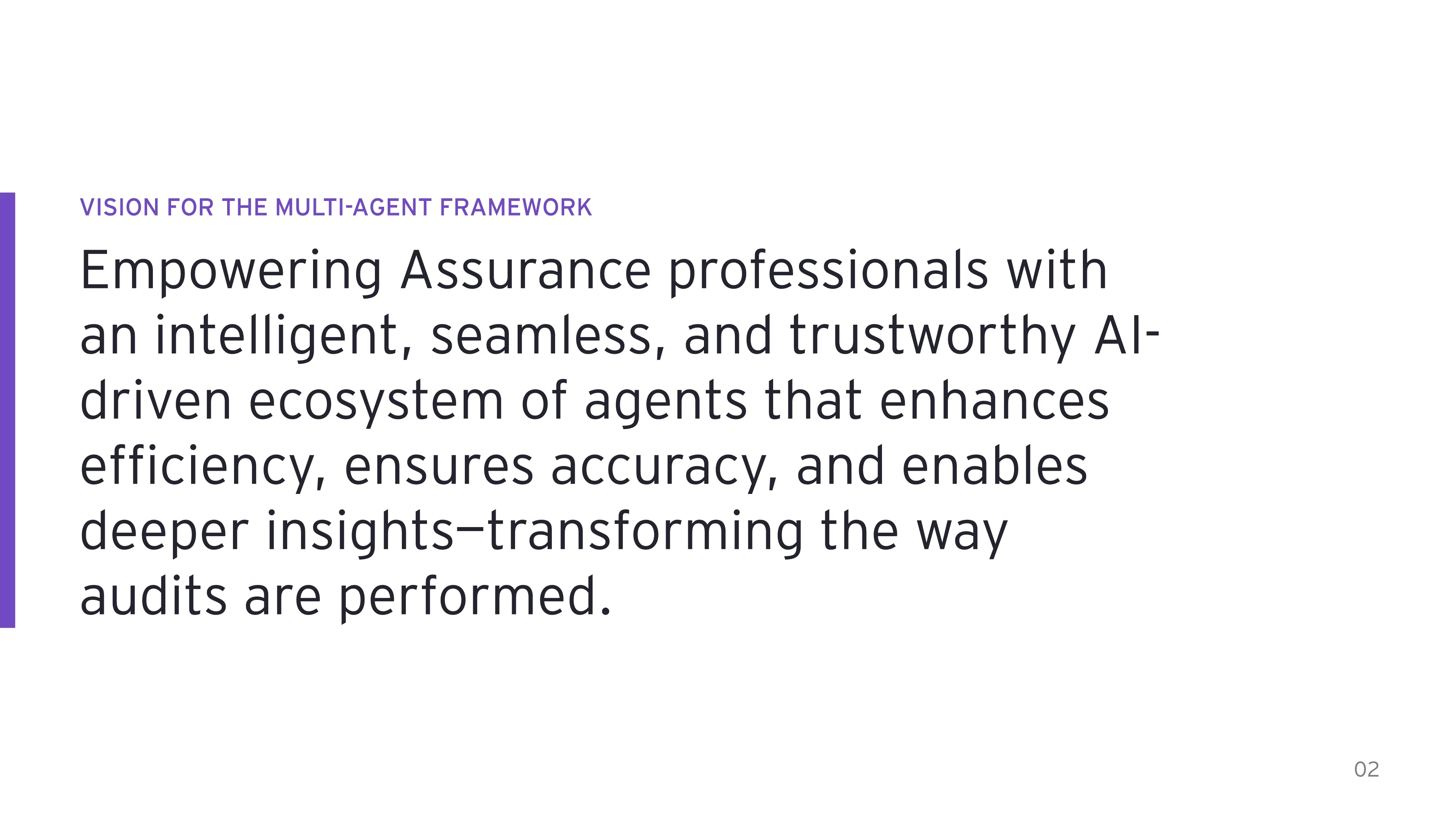

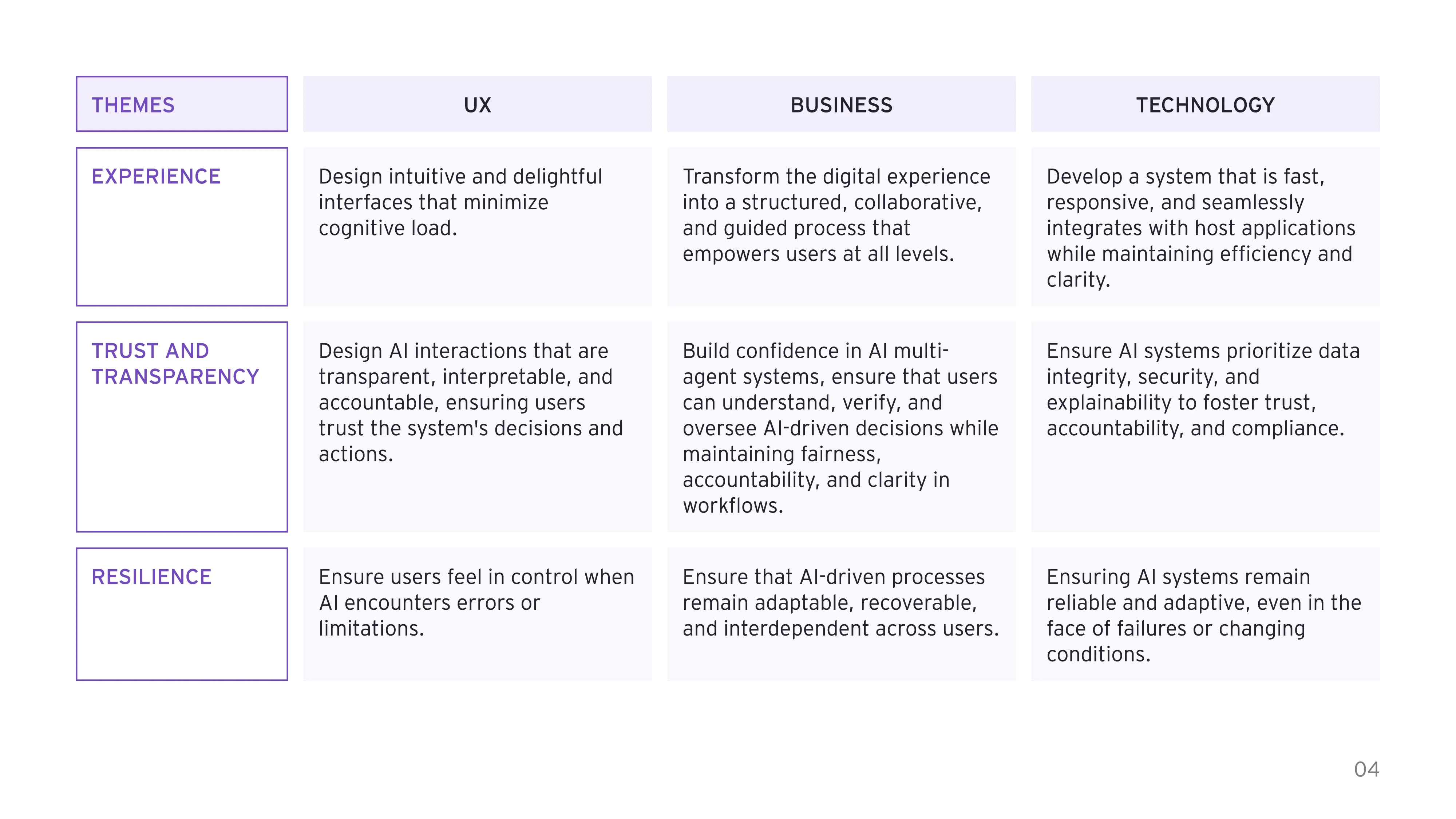
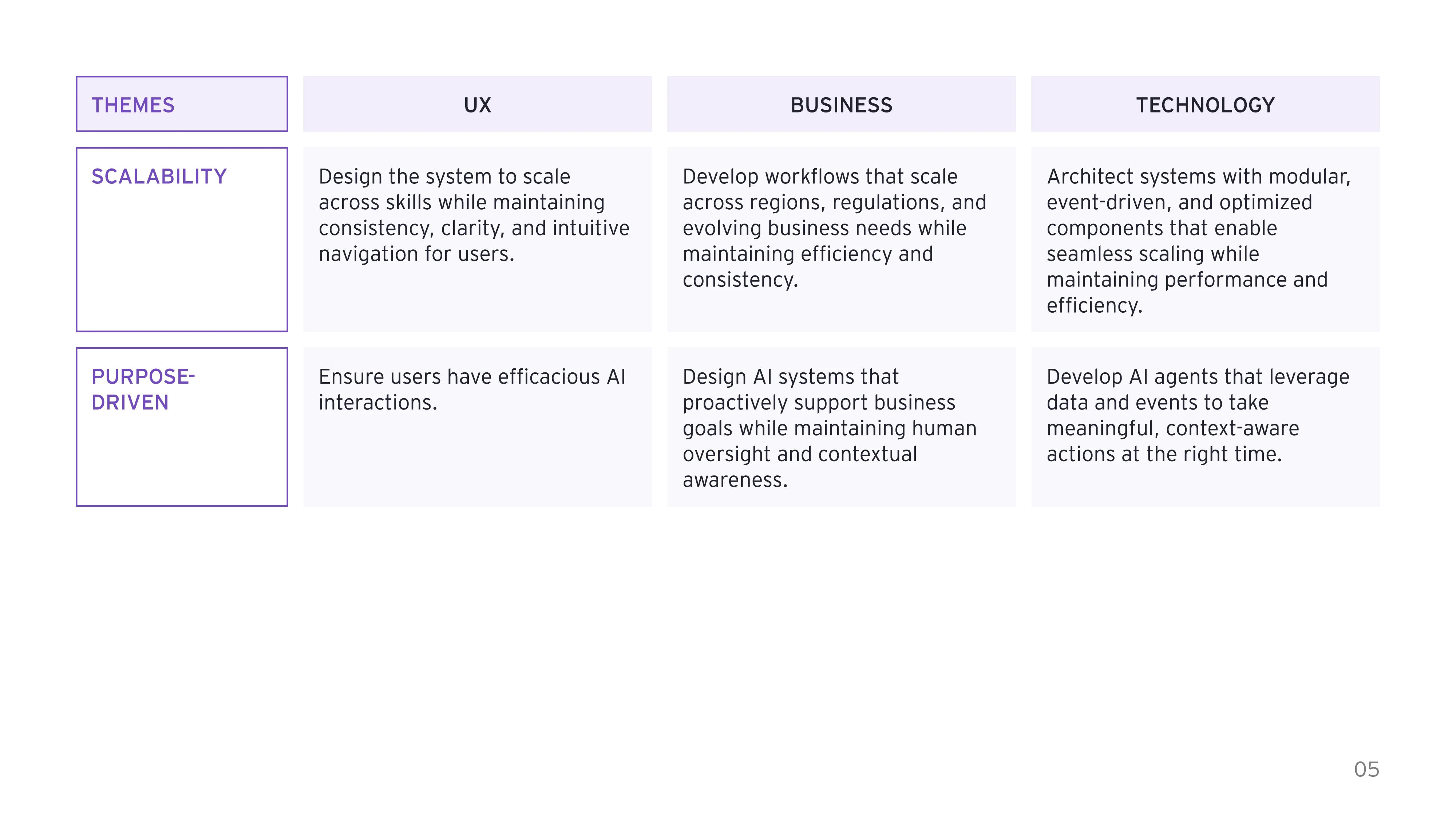

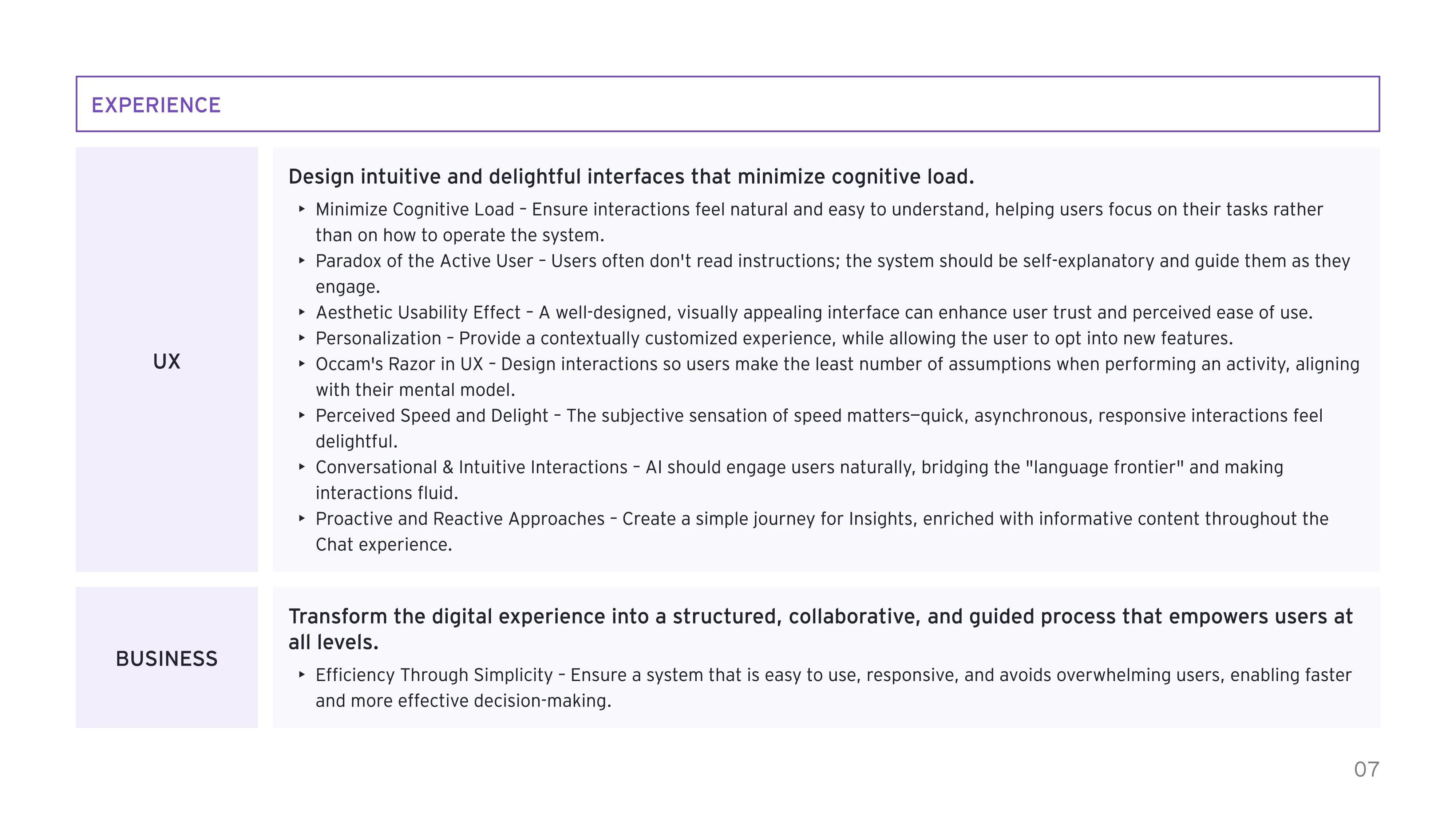
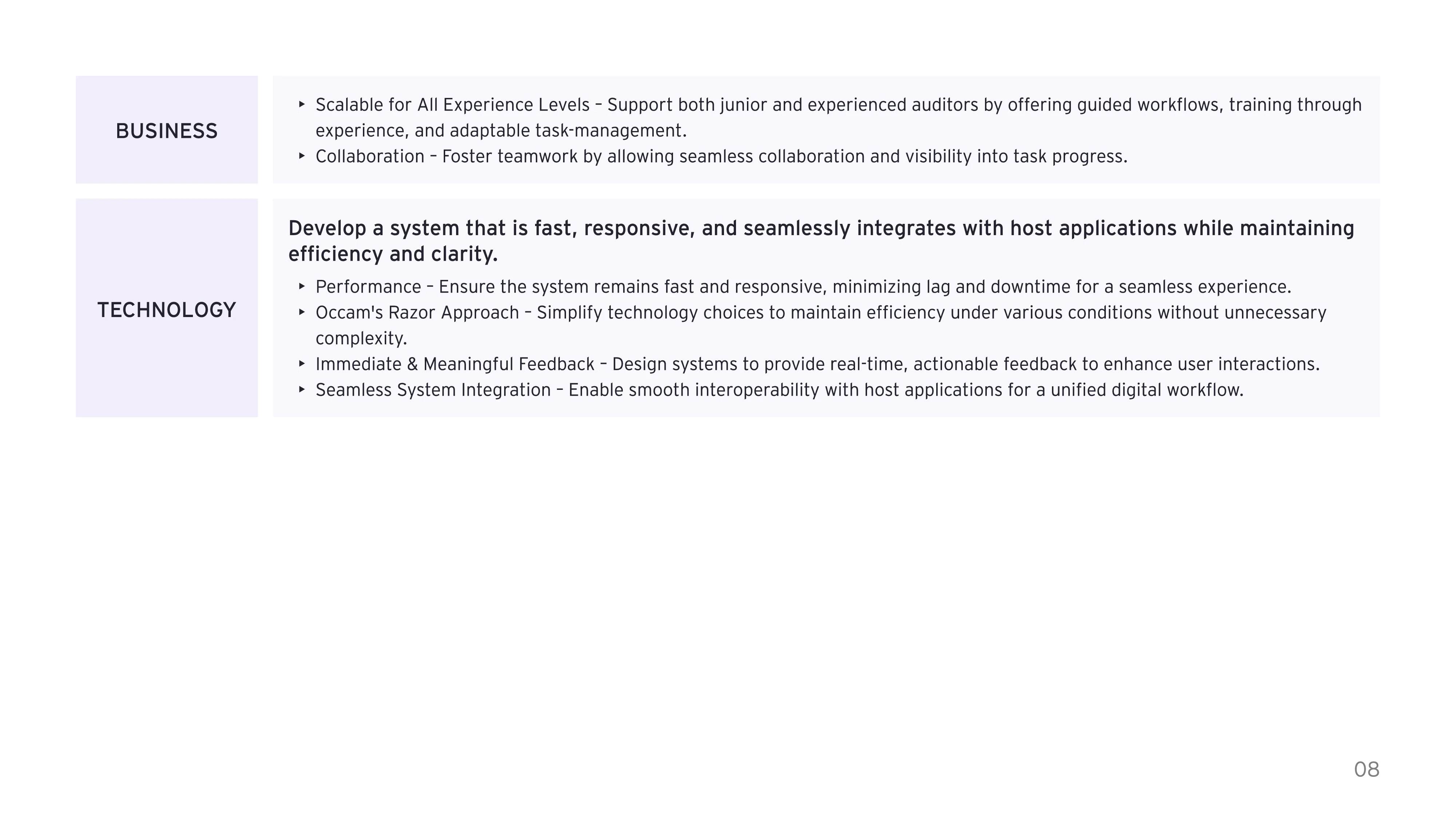
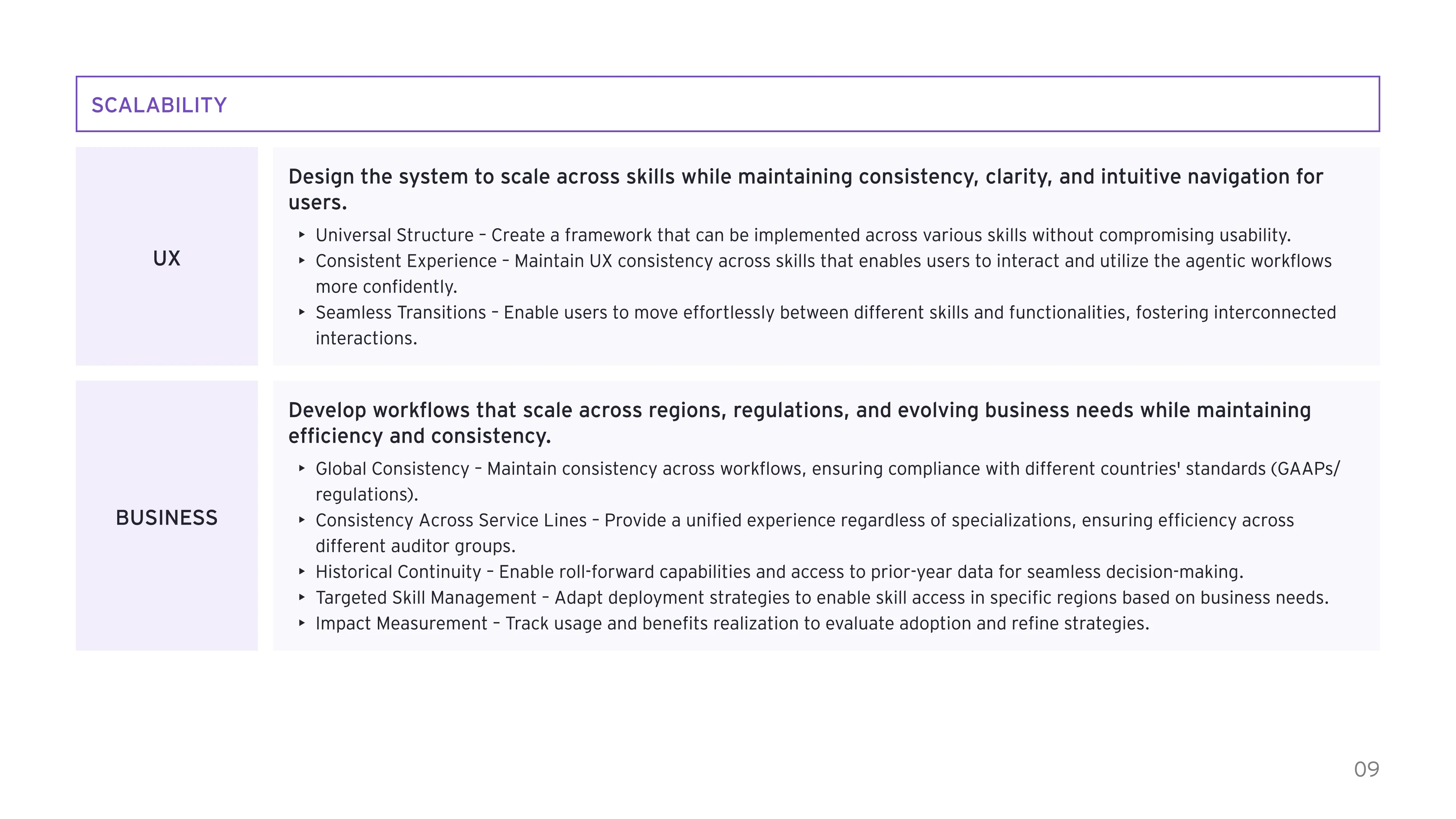
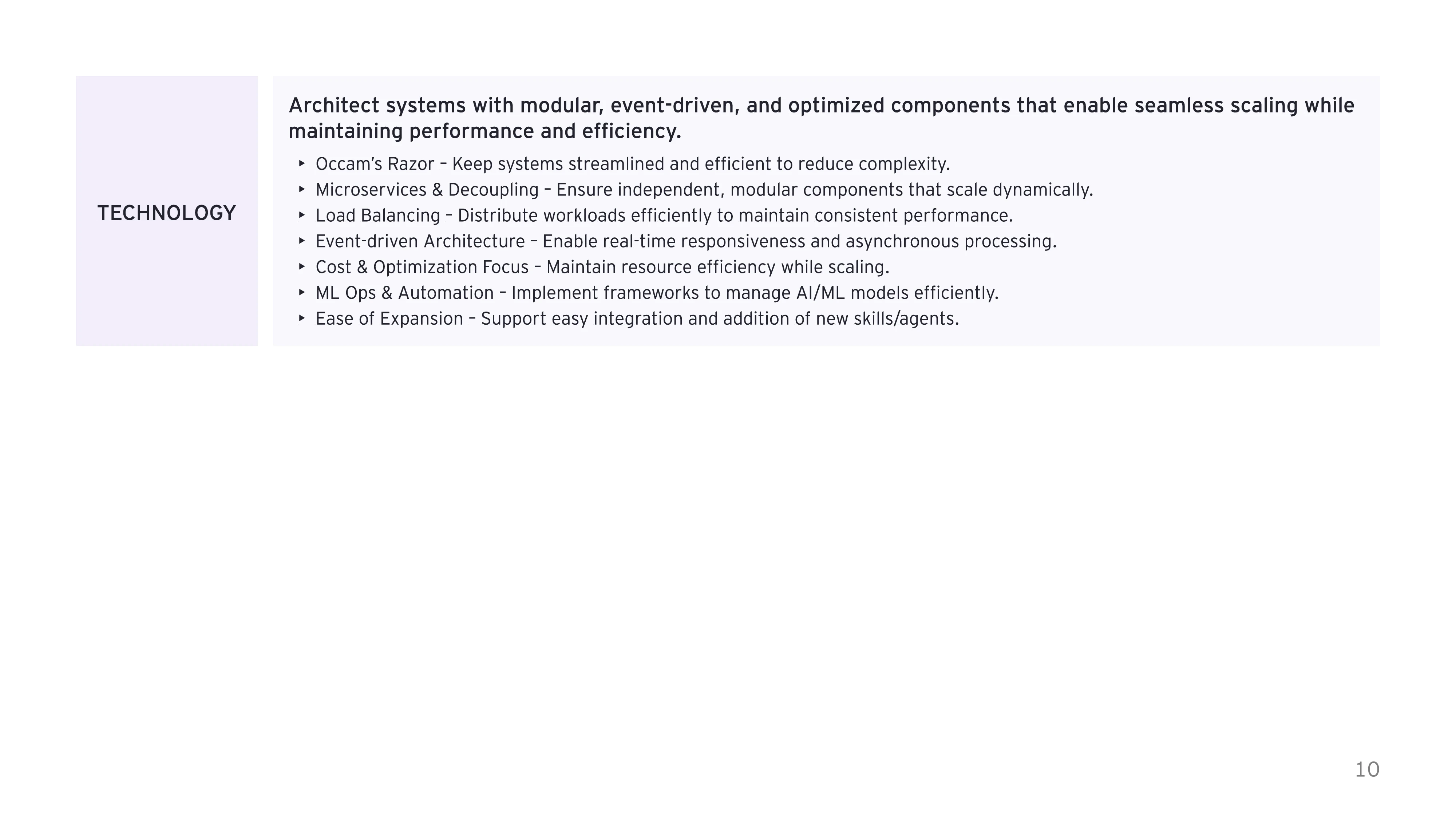
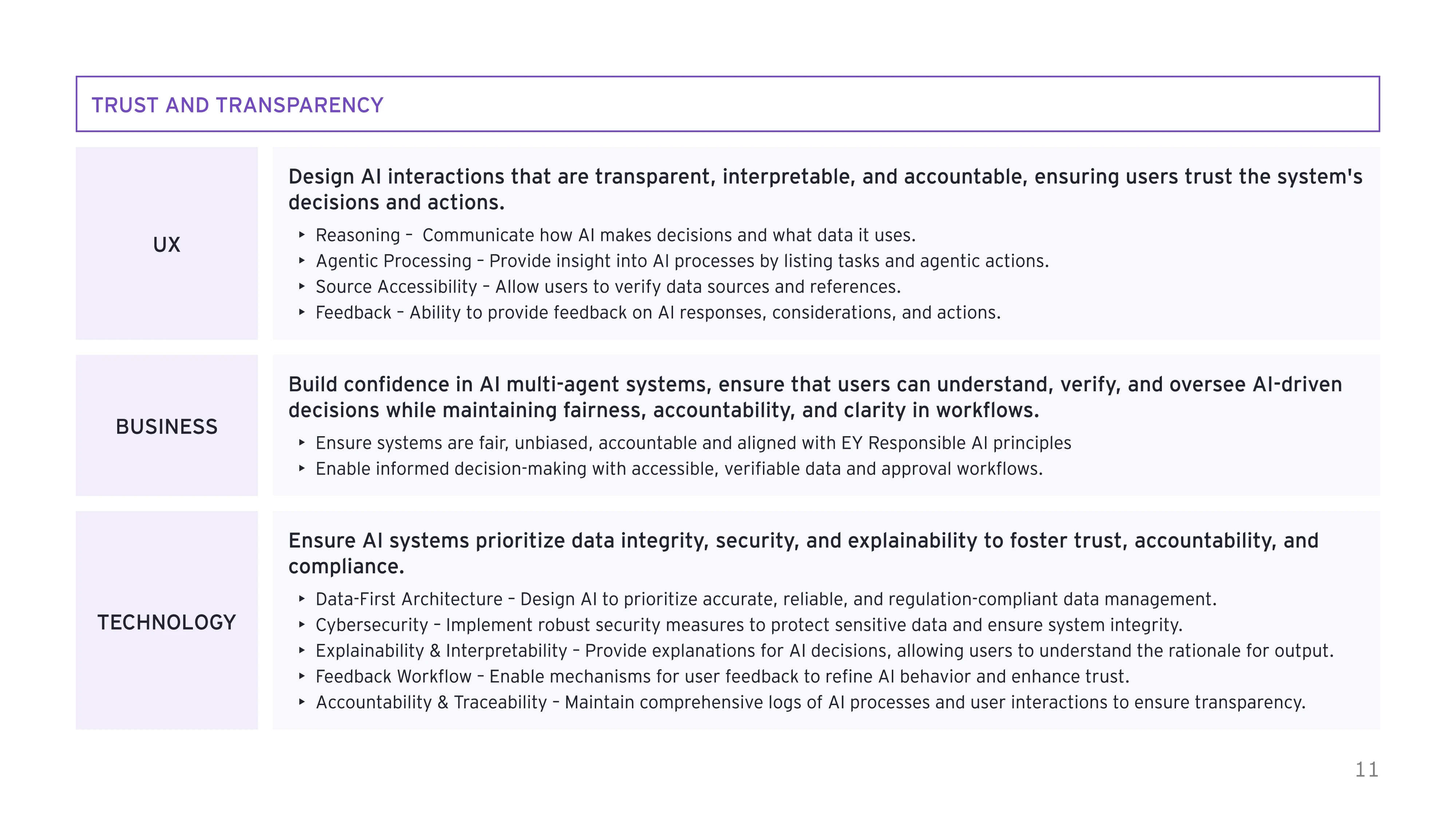
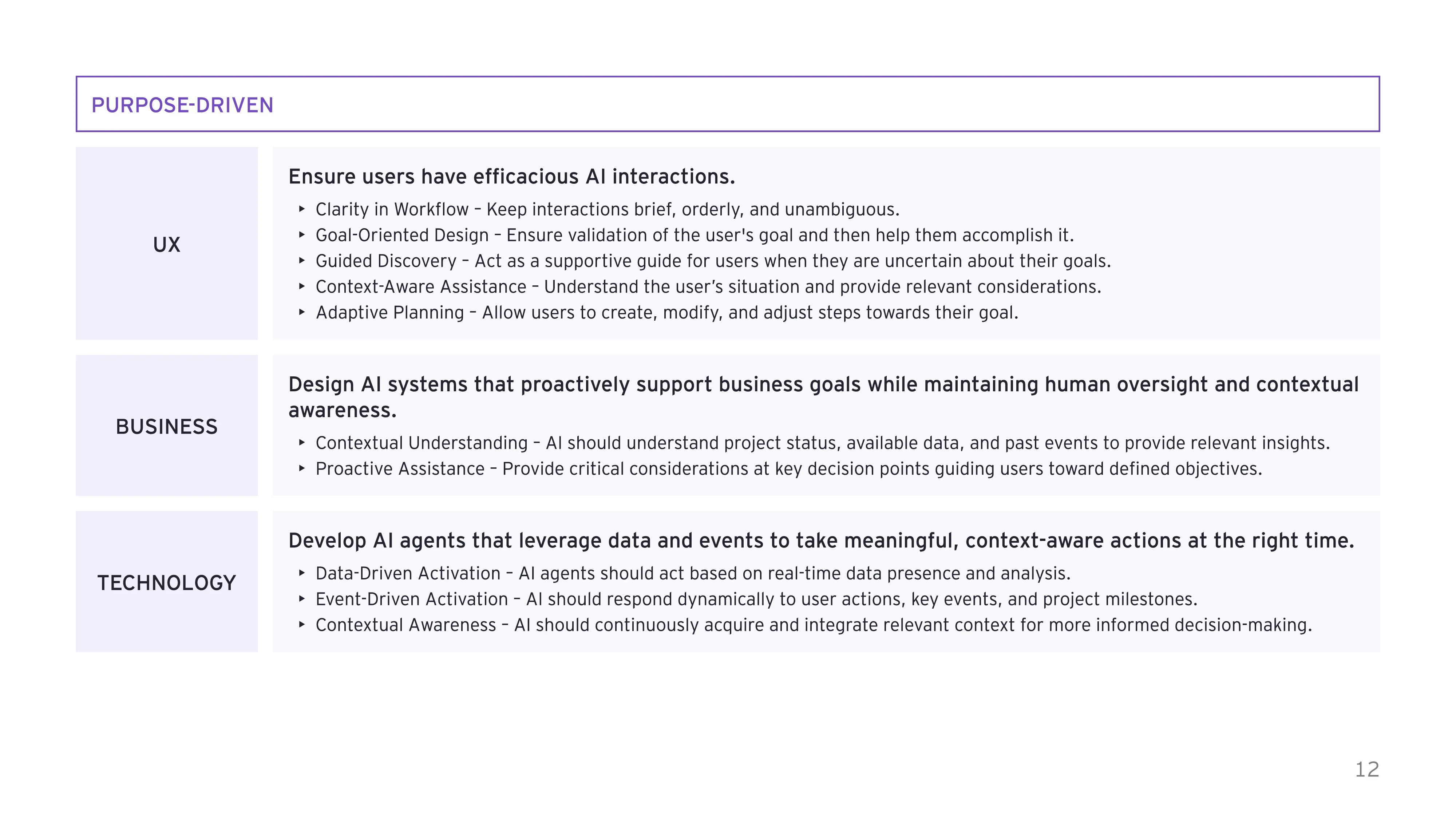
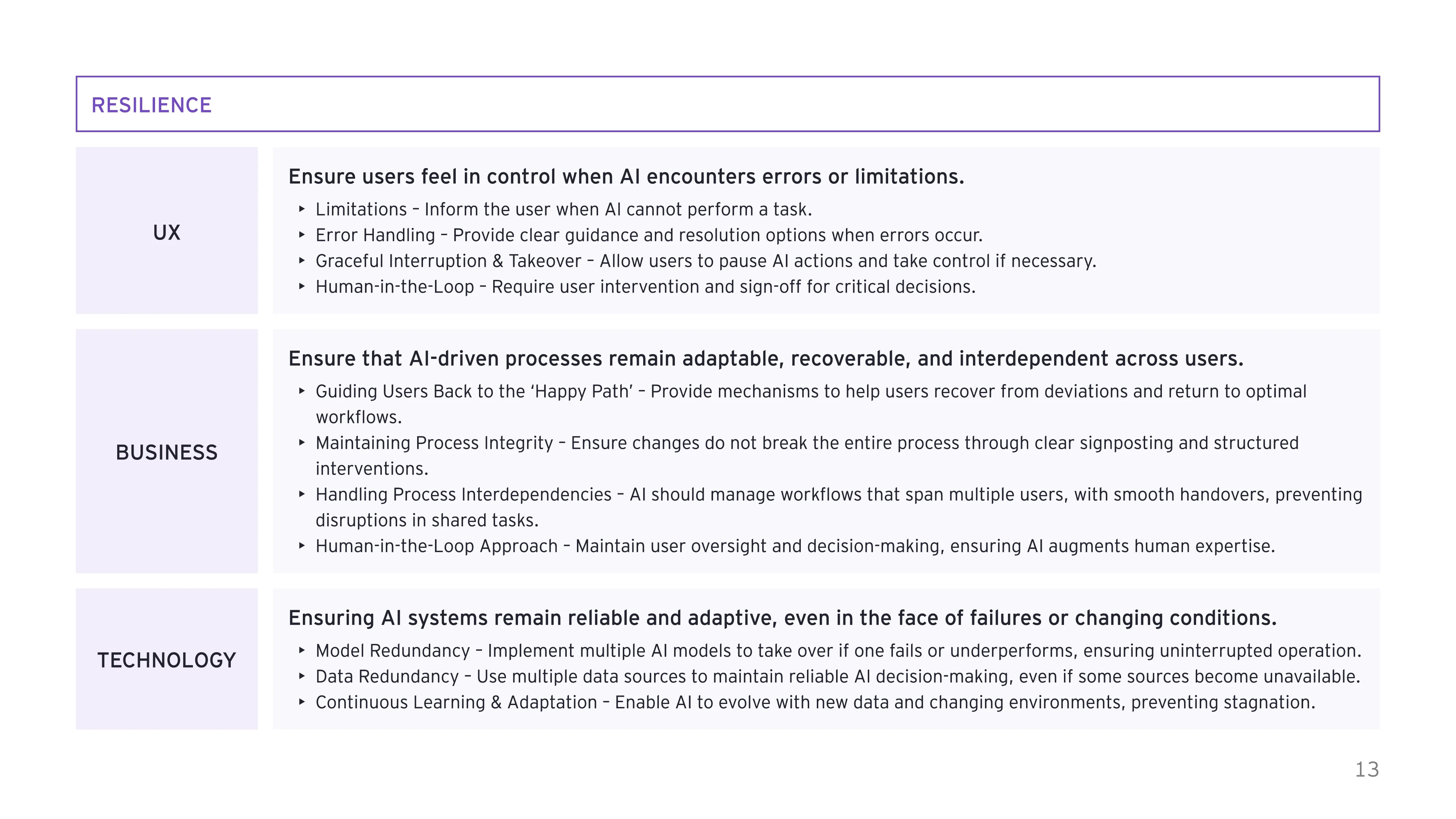
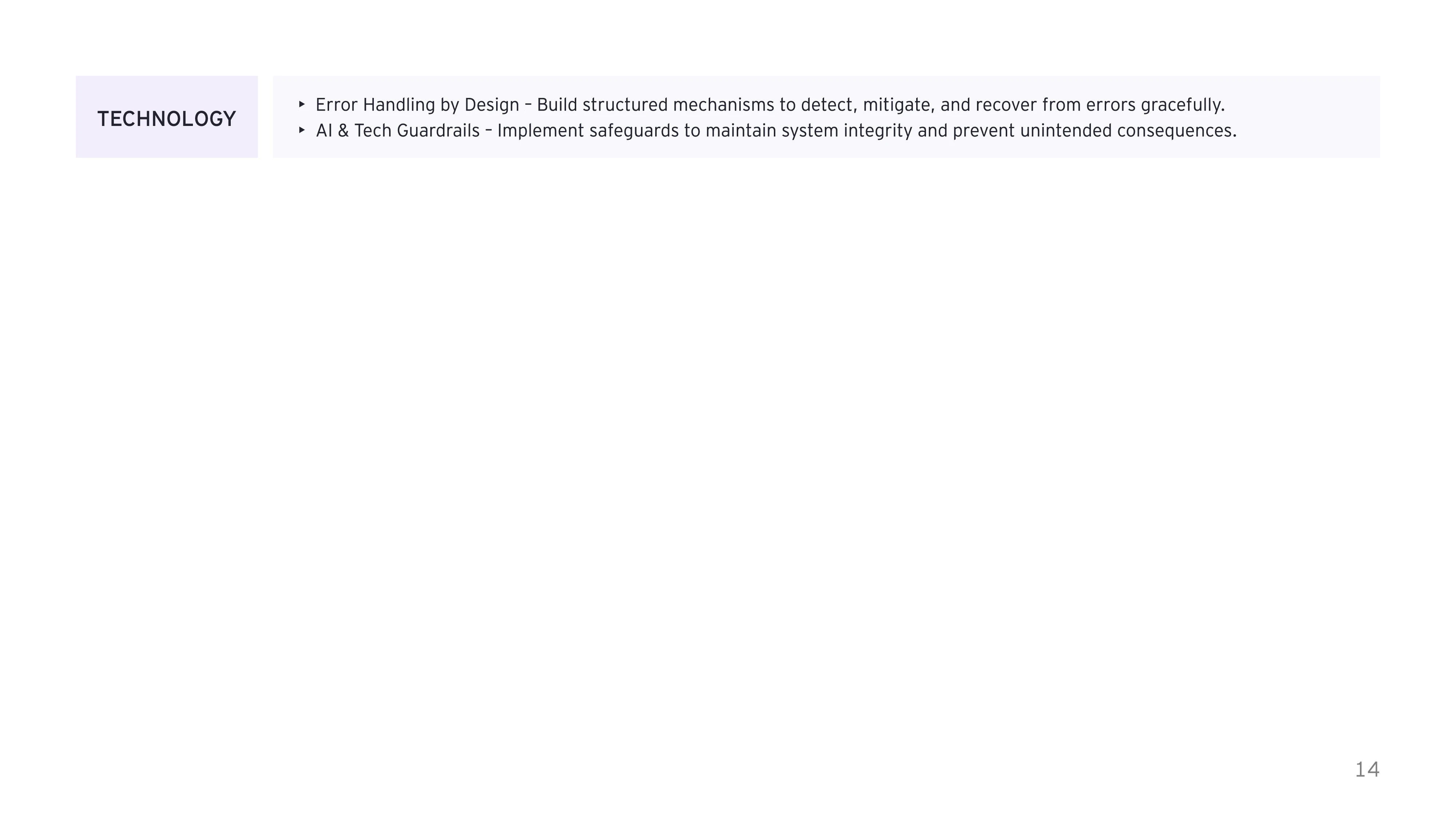
I ran a series of cross-functional workshops. The output was a shared vision and a design principles framework across five themes: Experience, Trust and Transparency, Scalability, Purpose-Driven, and Resilience, each defined across UX, business, and technology dimensions so they could be acted on, not just agreed to.
Why articulate principles across three dimensions? With a system this complex, principles only work if they're specific enough to resolve real disagreements. Saying "design for trust" means something different to a UX designer than it does to a technologist or a business stakeholder. Each theme was expressed three ways, what it demands of the interface, what it demands of the business workflow, and what it demands of the underlying technology, so the principles could actually be acted on, not just agreed to in a room.
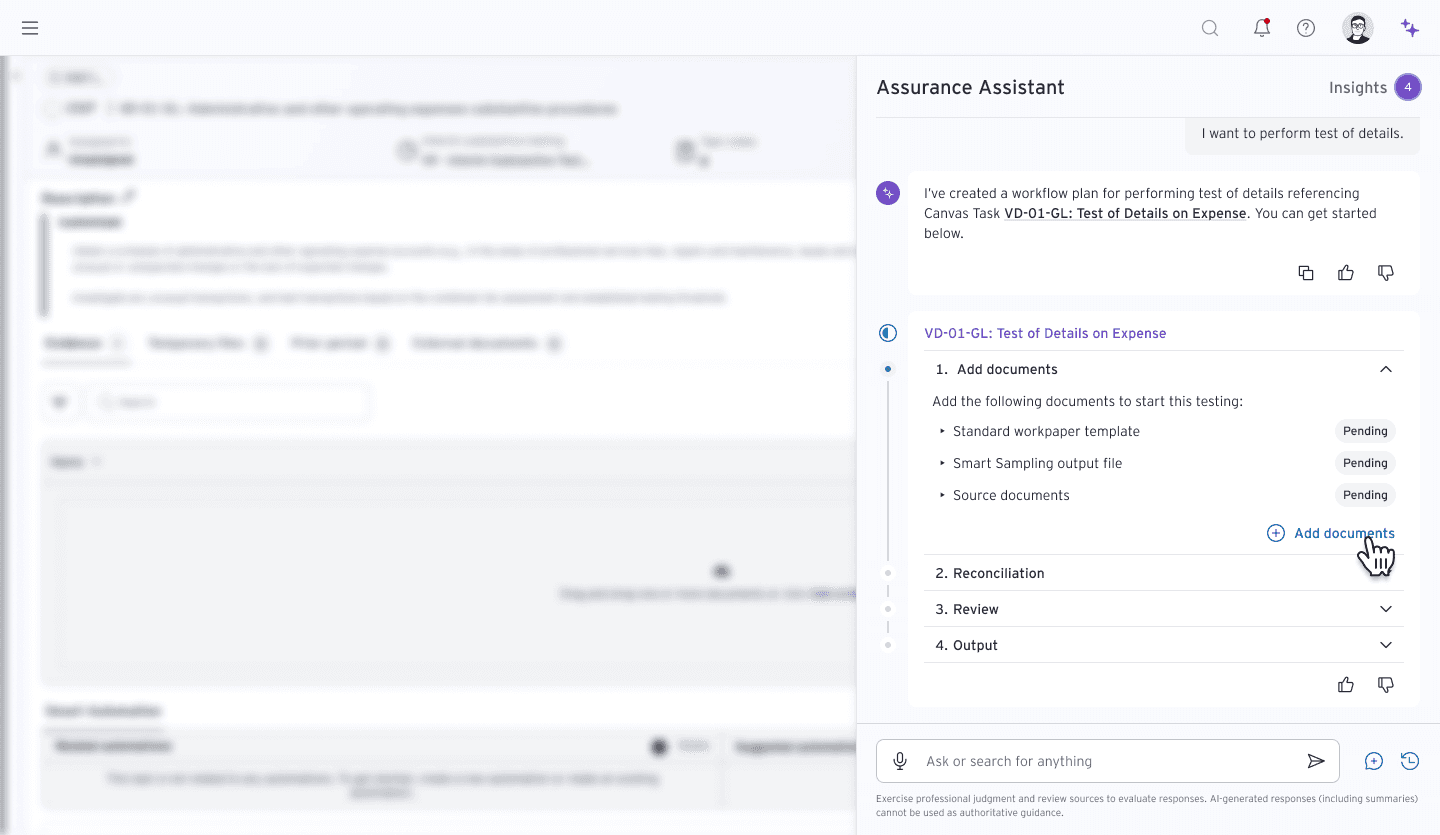
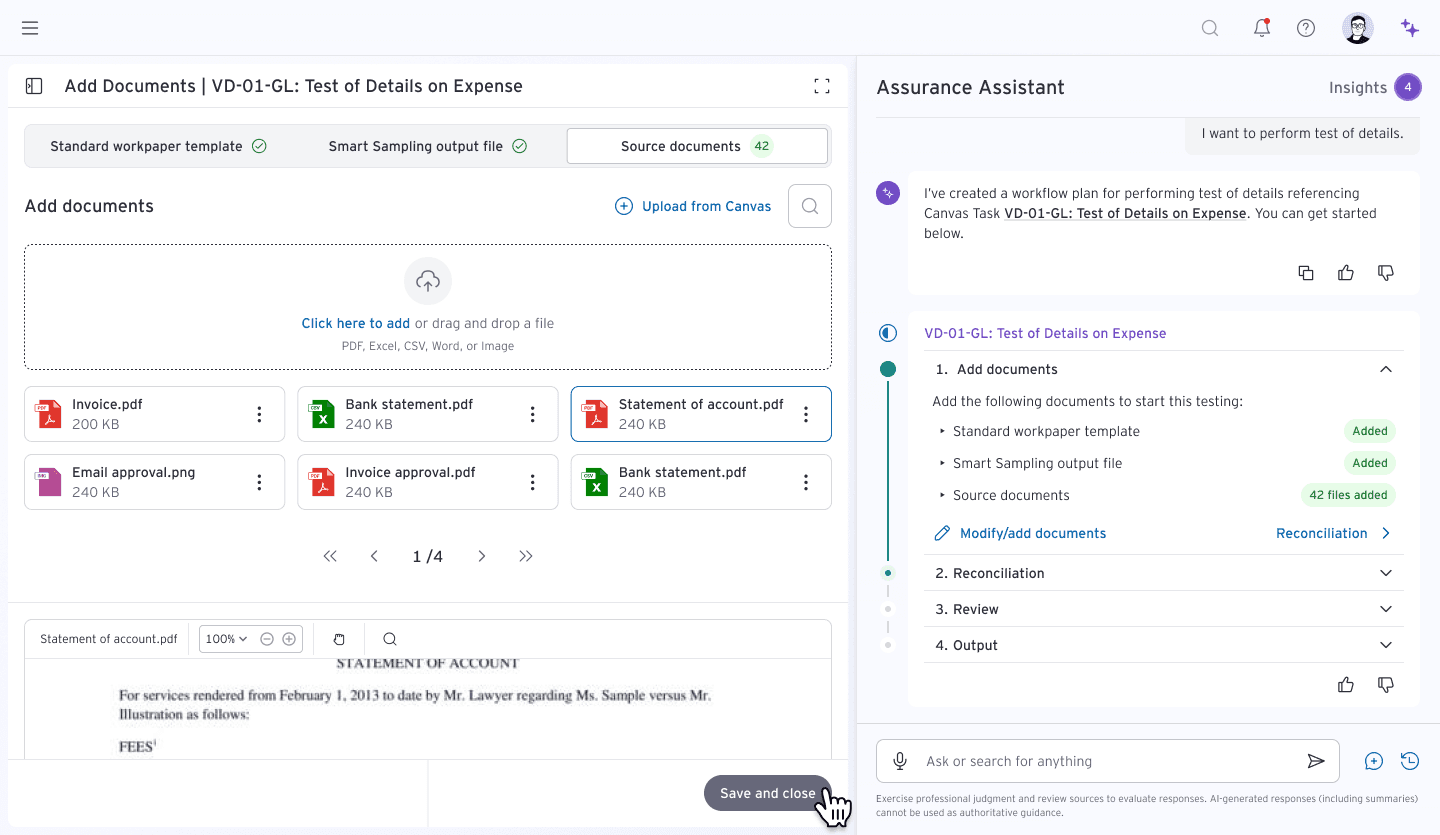
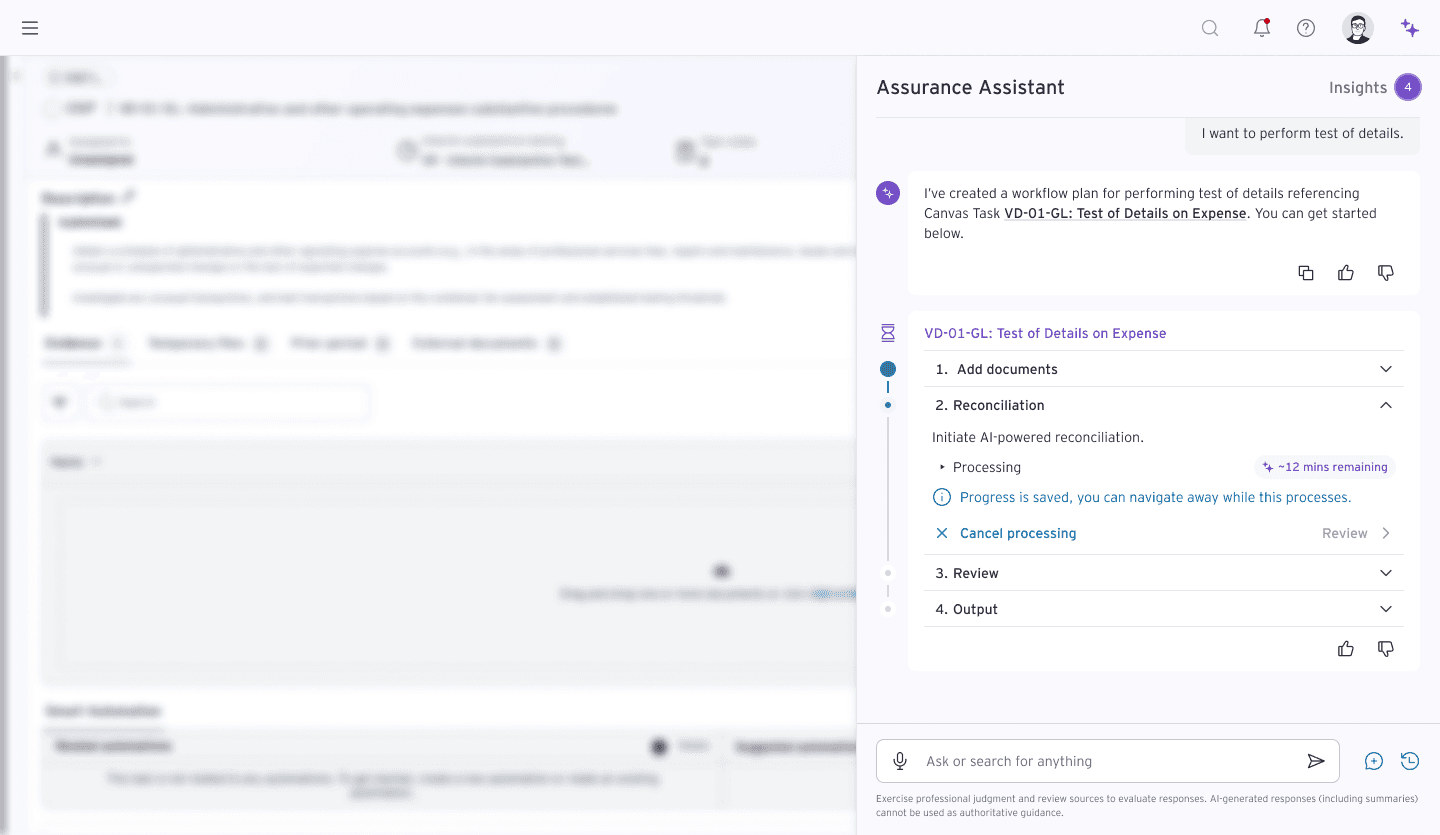
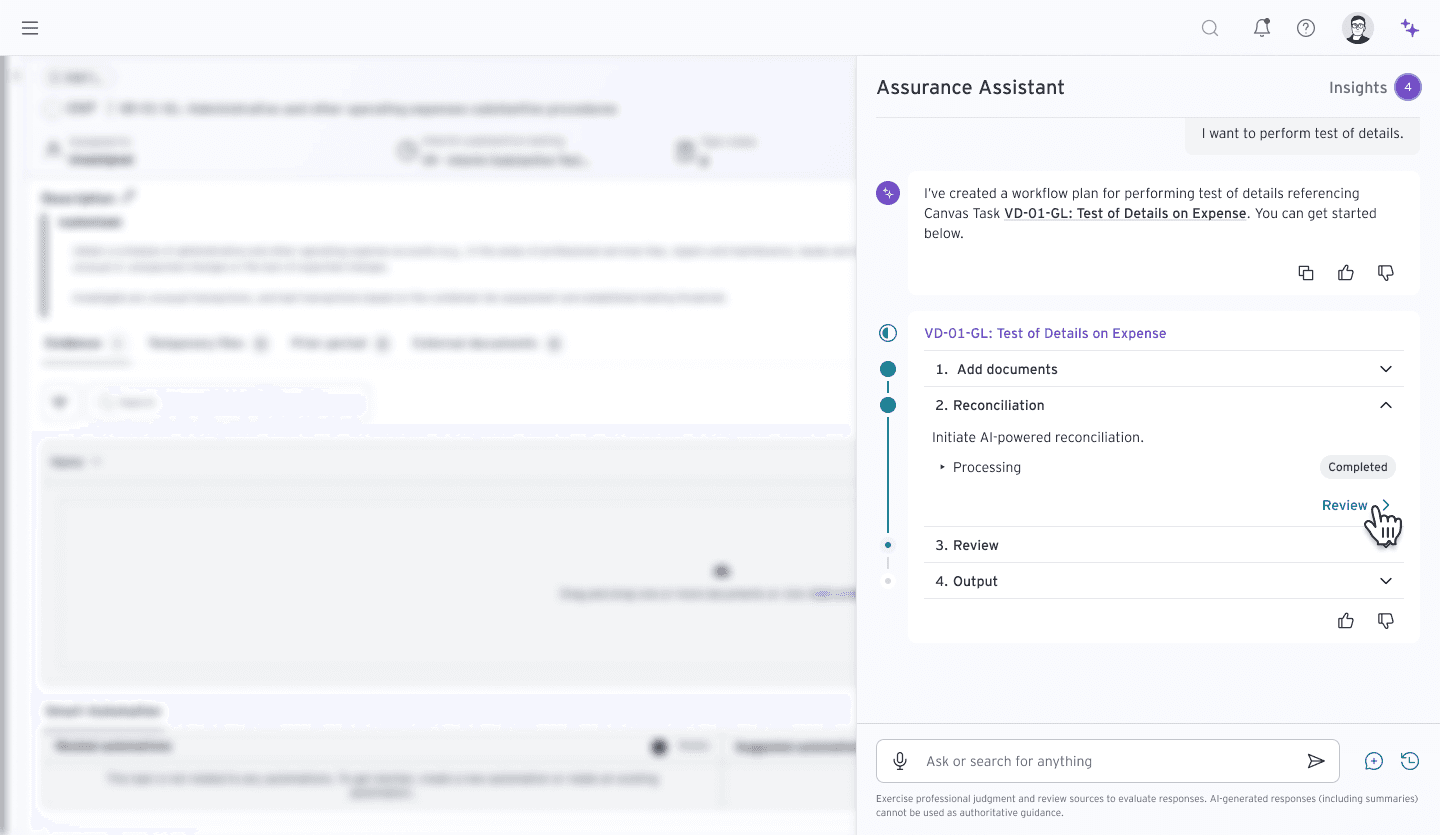
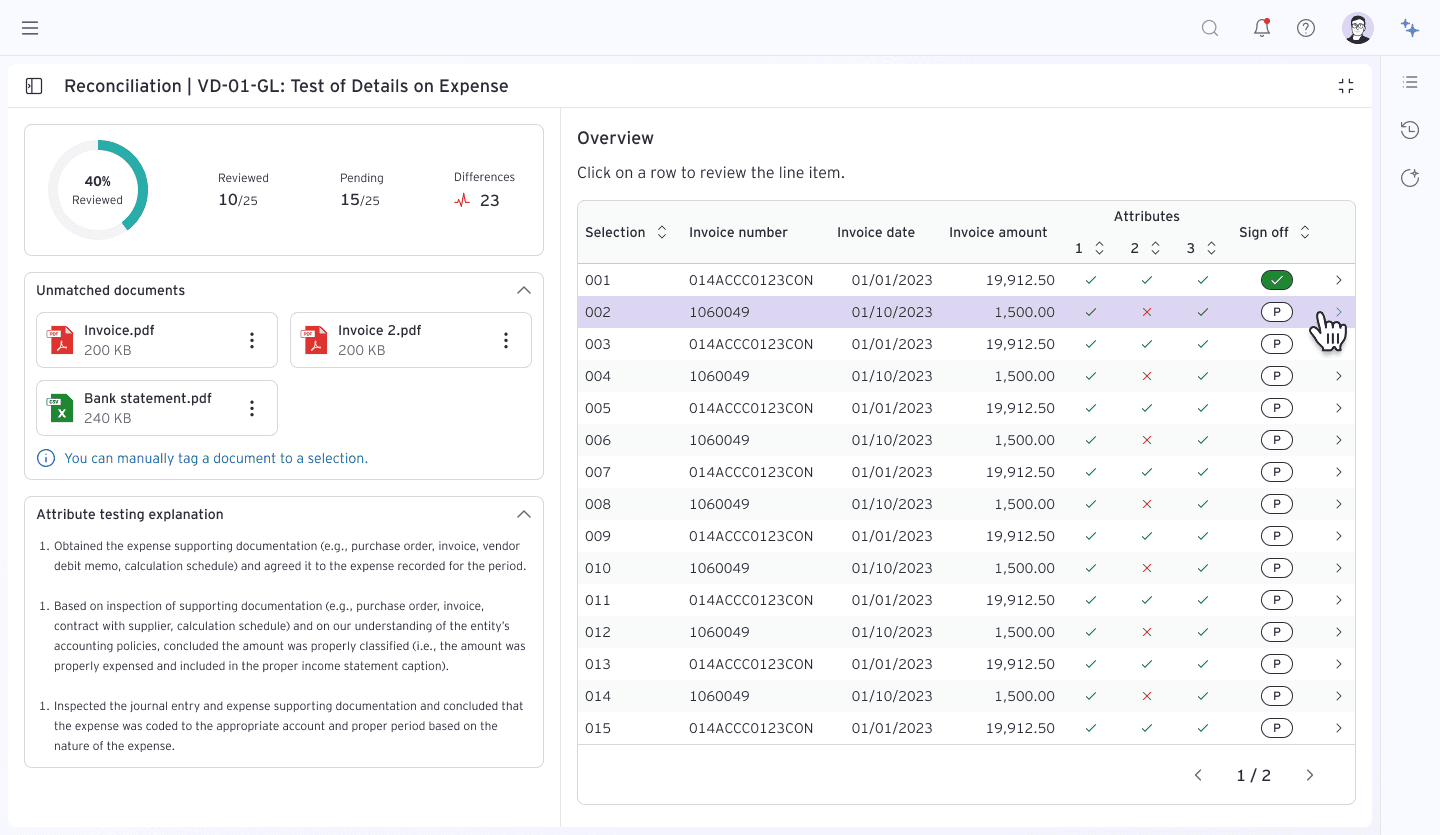
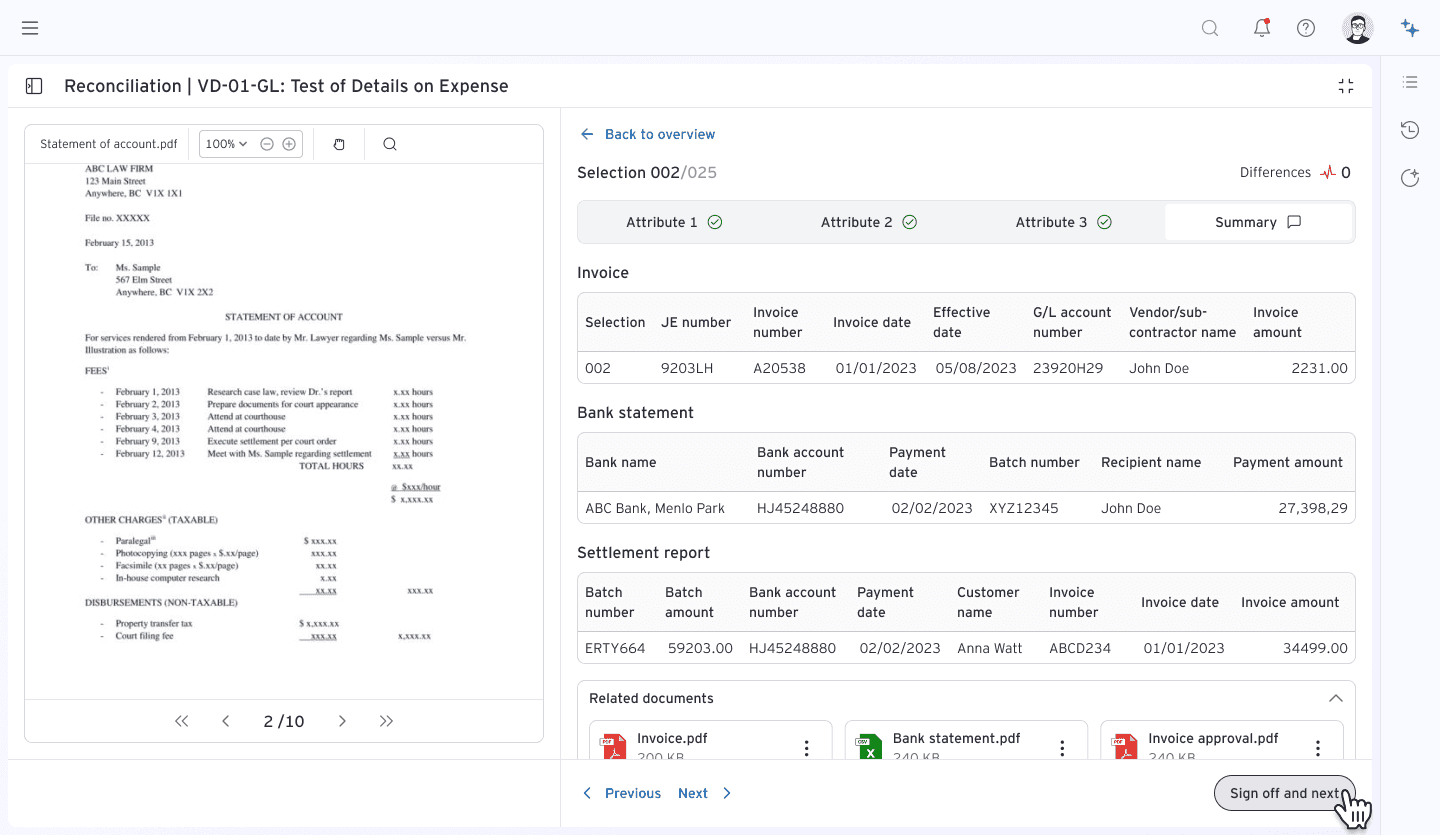
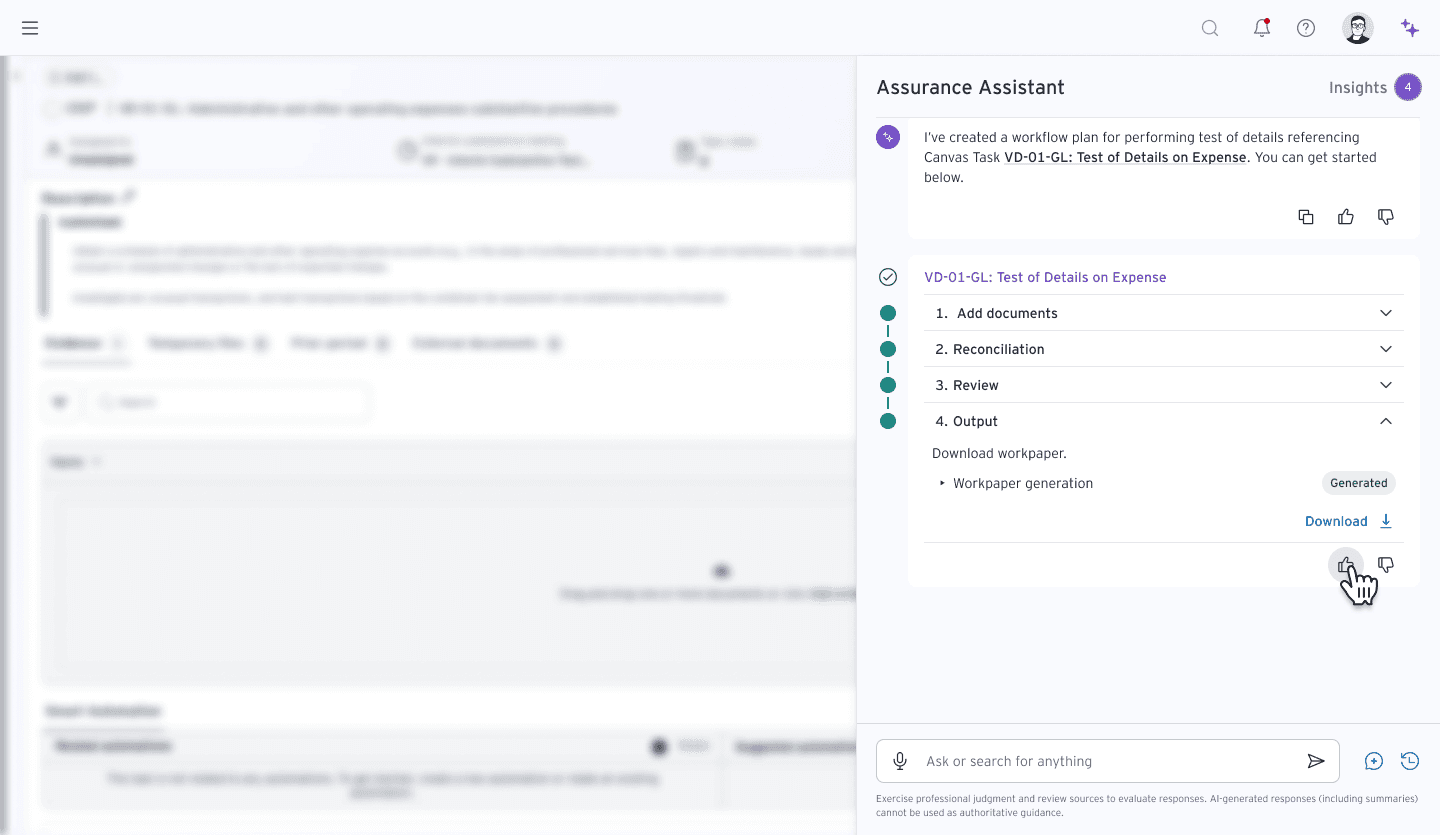
The framework became the foundation for the firm's first agentic AI workflow: reconciliation and test-of-details, a core financial audit procedure, designed end-to-end with these principles as the backbone.
You’ve been an amazing addition to the team. I really appreciate all your efforts in helping the AI team move forward and appreciate your ability to not only help research, concept and design, but also to really think through all scenarios, defend the design decisions and question business wants vs. needs. It’s been great to see your growth and ability to take charge and help lead the team. Thank you for being such a team player and for all your hard work wrangling in the business.